Is Link Building Getting Harder? An Honest Answer.

Jump to section [Open]
Every conference I speak at, someone asks me this in the Q&A. Usually phrased like a complaint. Sometimes phrased like a quiet panic.
My answer is the same every time. Yes… and no. 🫣 But the harder parts are not the parts most people think.
What got harder, and it’s not what LinkedIn tells you
Quality publishers are tougher to land. That part is real. Editorial standards on the sites worth getting on have climbed. Generic guest post pitches with three SEO-optimized paragraphs and a transactional anchor get ignored. Acceptance rates on cold outreach are down across every Bazoom vertical I track, and it’s not because the publishers got greedy. It’s because they got 40 of the same pitch this week.
Publisher supply hasn’t shrunk. Standards have risen. There’s clearly a difference, and it matters for how you build.
The other thing that got harder is attribution. The December 2025 core update reshuffled enough rankings that clients started asking different questions.
One of our crypto verticals lost serious traffic that month. We traced the drop to two compounding issues. The core update penalized intermediaries in that niche, and a Telegram-based spam network started pointing 1,000+ throwaway links per week at the domain. DR fell from 53 to 43 in a quarter. None of it was caused by our link building, but somehow all of it landed in the same dashboard.
Clients see the line going down and they demand a single explanation. Your job got harder because the diagnostic work got longer.
What actually got easier
Data-backed pitches close. They always did, but the gap between them and everything else has widened.
When I send a publisher a custom angle with a unique stat their audience hasn’t seen, my reply rate is roughly 3x what it was four years ago. Because the inbox they’re competing against is full of AI-generated slop, and a human-crafted, evidence-led pitch now reads like a gift.
The bar for standing out is lower. The bar for being mediocre is higher. Those are the same fact.
Tooling is also better. I can pull an Ahrefs Link Intersect, cross-reference with a client’s GSC data, and have a ranked outreach list inside an hour. Five years ago that was a week of work for a junior. The leverage is real if you actually use it.
What the industry won’t admit
Most of the panic about link building dying is a sales pitch. The same people who told you last year that AEO was a separate discipline are now telling you that GEO is a separate discipline, and next year it’ll be something else. None of it is.
The Ahrefs research I presented at BrightonSEO this spring covered 3 million URLs across traditional SERPs, AI Mode, and ChatGPT. Around 75% of cited URLs across all three systems have DR 40+. The source pool is largely the same. The systems disagree on which sources to surface, not on what the universe of acceptable sources looks like.
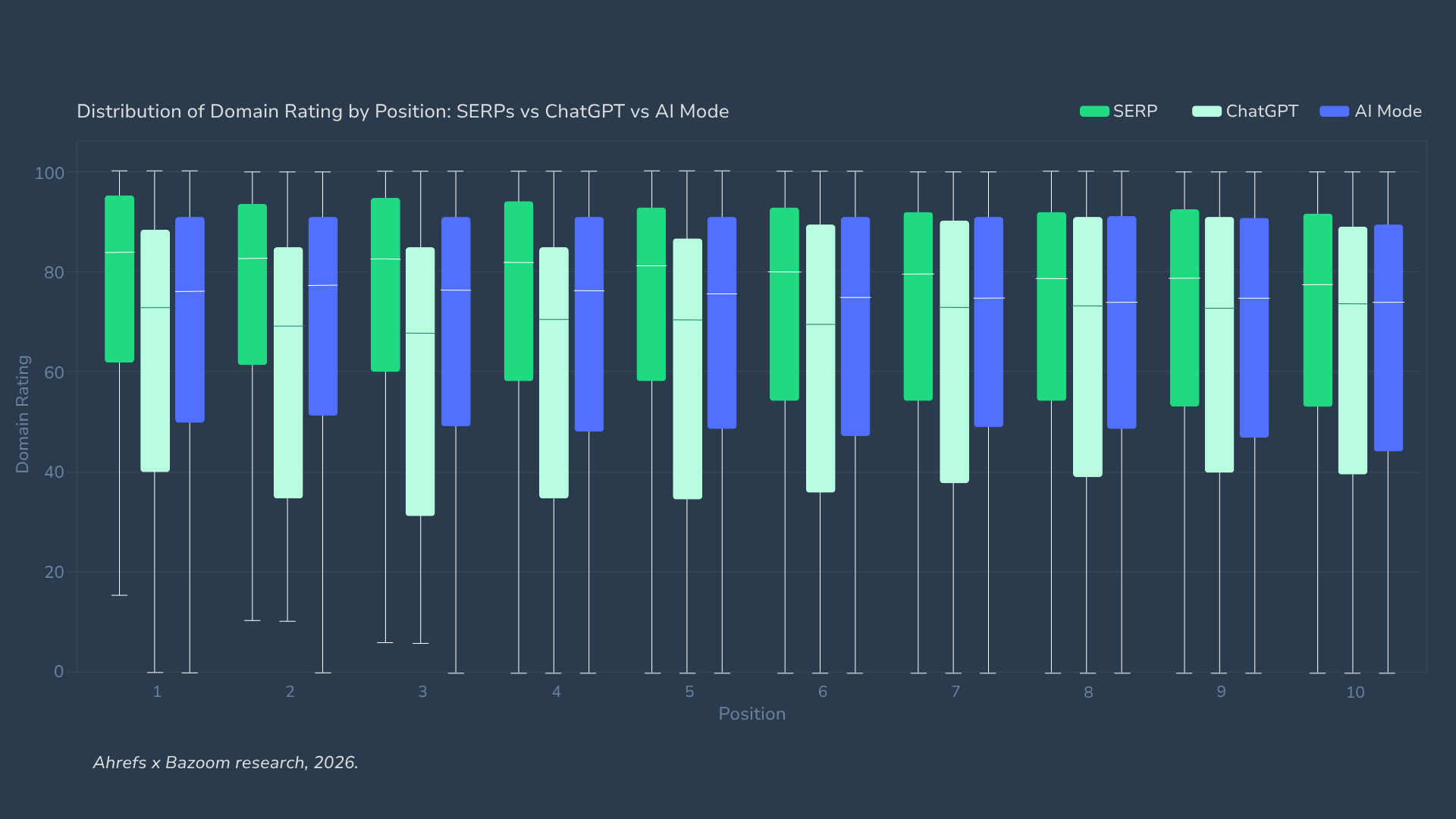
Which means the link building that works for Google still feeds the systems that come after Google. Our crypto case study moved 26 links across four months. Organic traffic grew 118%. AI citations across ChatGPT, Perplexity, Gemini, Copilot, and AI Overviews grew alongside it. No AEO, GEO, or AI-only special tactics.
SEO is the entry ticket. Content quality decides if you get quoted. The two-layer model is doing more work than any acronym the industry will sell you this year.
So is it harder or not?
It’s harder if you were getting away with mass outreach, transactional anchors, and DR-only scoring. Those have been losing ground for years and AI just sped up the timeline.
It’s easier if you treat every placement as a small piece of evidence about a brand. Relevance over volume. Editorial fit over metric padding. Original data over recycled tips. That work used to be a differentiator. Now it’s the floor.
The honest answer is that link building got harder for everyone who was doing the lazy version, and got more rewarding for everyone who wasn’t. The industry won’t say that out loud because half its revenue depends on selling the lazy version.
I’d rather tell you the truth and lose the easy sales pitch.