Link Spam in iGaming and Crypto: Where It Comes From and How to Spot It
Jump to section [Open]
Let’s face it, most link spam in iGaming and crypto isn’t bought by mistake. It’s sold as “premium”, with a DR 70 badge and a traffic number that looks great in a report.
And here’s why it costs more in 2026 than it did a year ago:
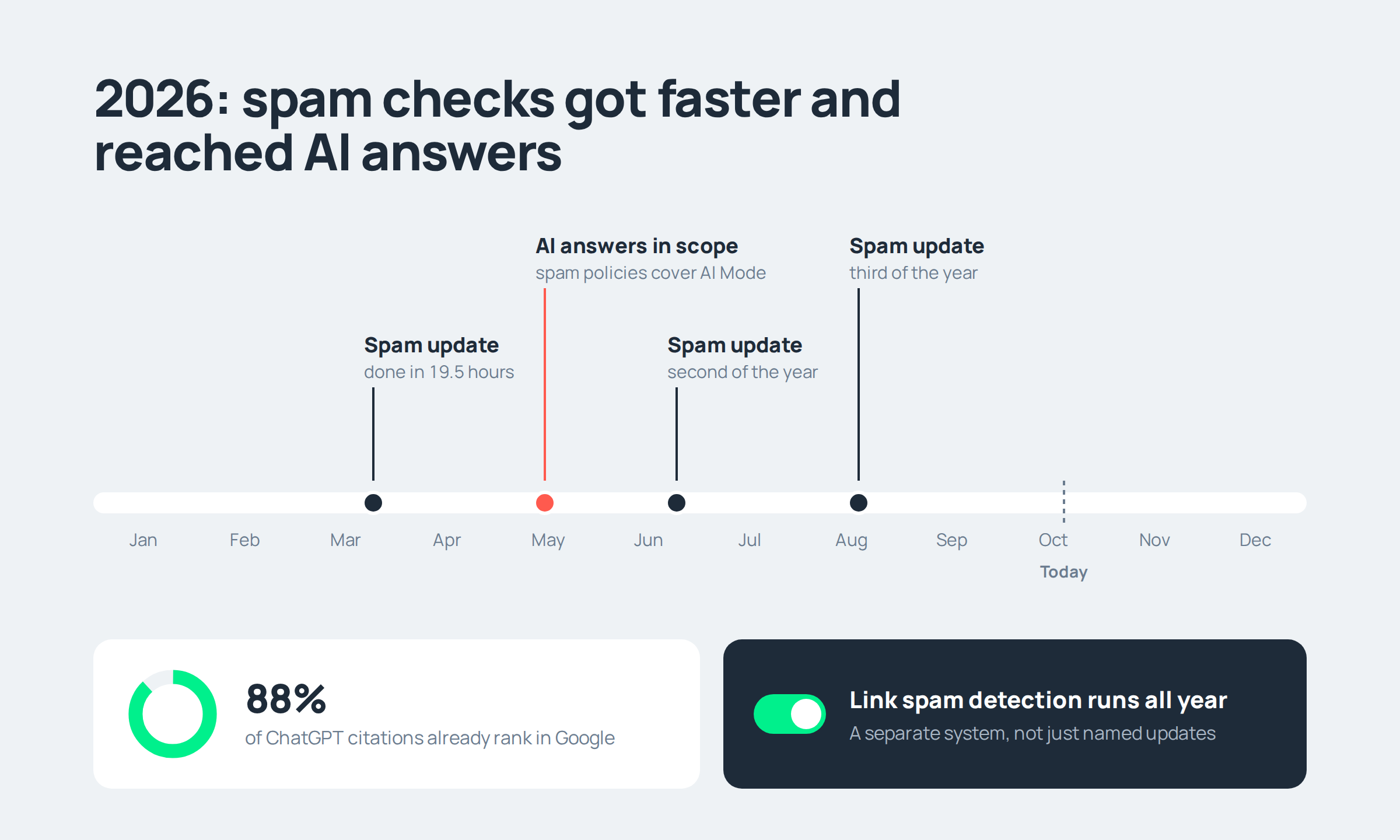
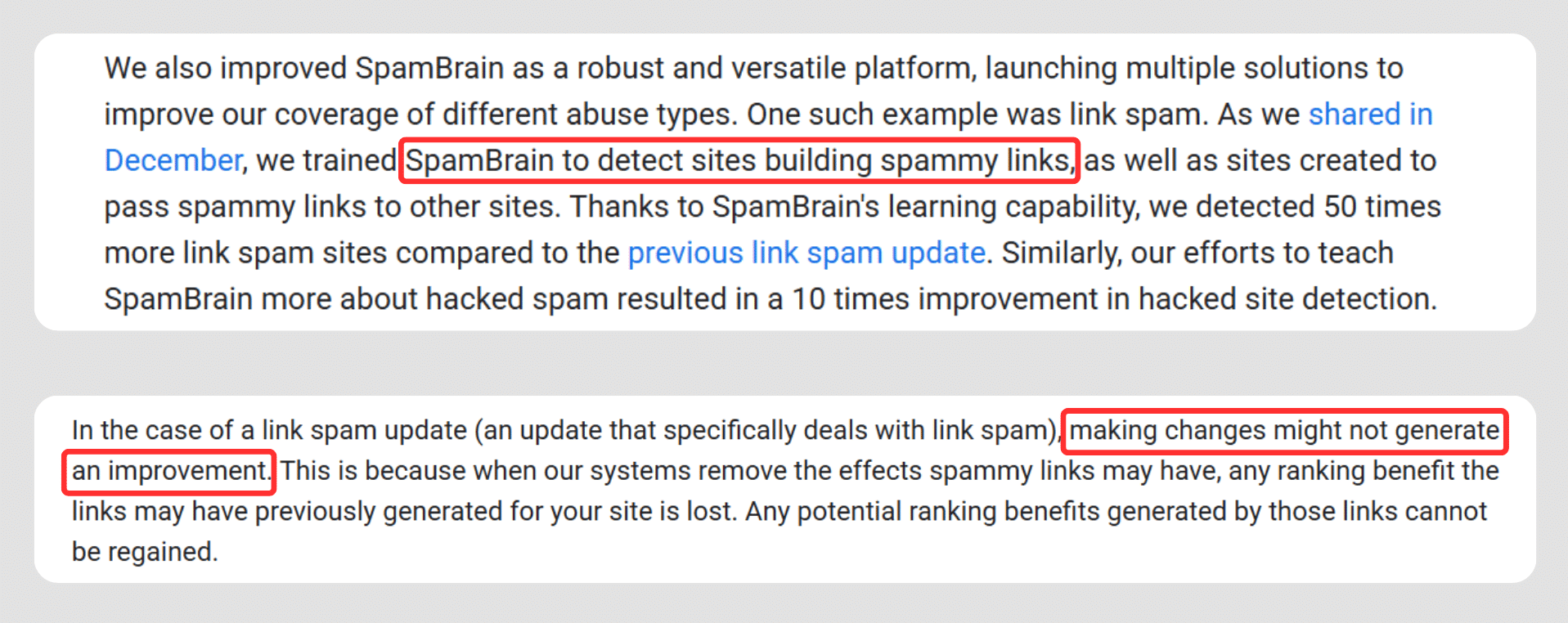
- You can’t wait it out. Google says link spam is handled by a separate system on its own schedule, not just during named updates.
- The value doesn’t come back. After a link spam update, Google’s own docs say changes might not generate an improvement. Discounted links stay discounted.
- AI answers are in scope. Since 15 May 2026, Google’s spam policies explicitly cover AI Overviews and AI Mode, including link spam and inauthentic mentions.
- Organic authority feeds AI visibility. In our 3M-URL study with Ahrefs, 88% of ChatGPT citations already ranked in traditional search. Lose one, you lose both.
With SiGMA World and AIBC landing in Rome on 2 to 5 November, every operator will be pitched “AI visibility” packages. This guide shows you which links to avoid, where they come from, and how to check any publisher in five minutes.
The link spam risk map
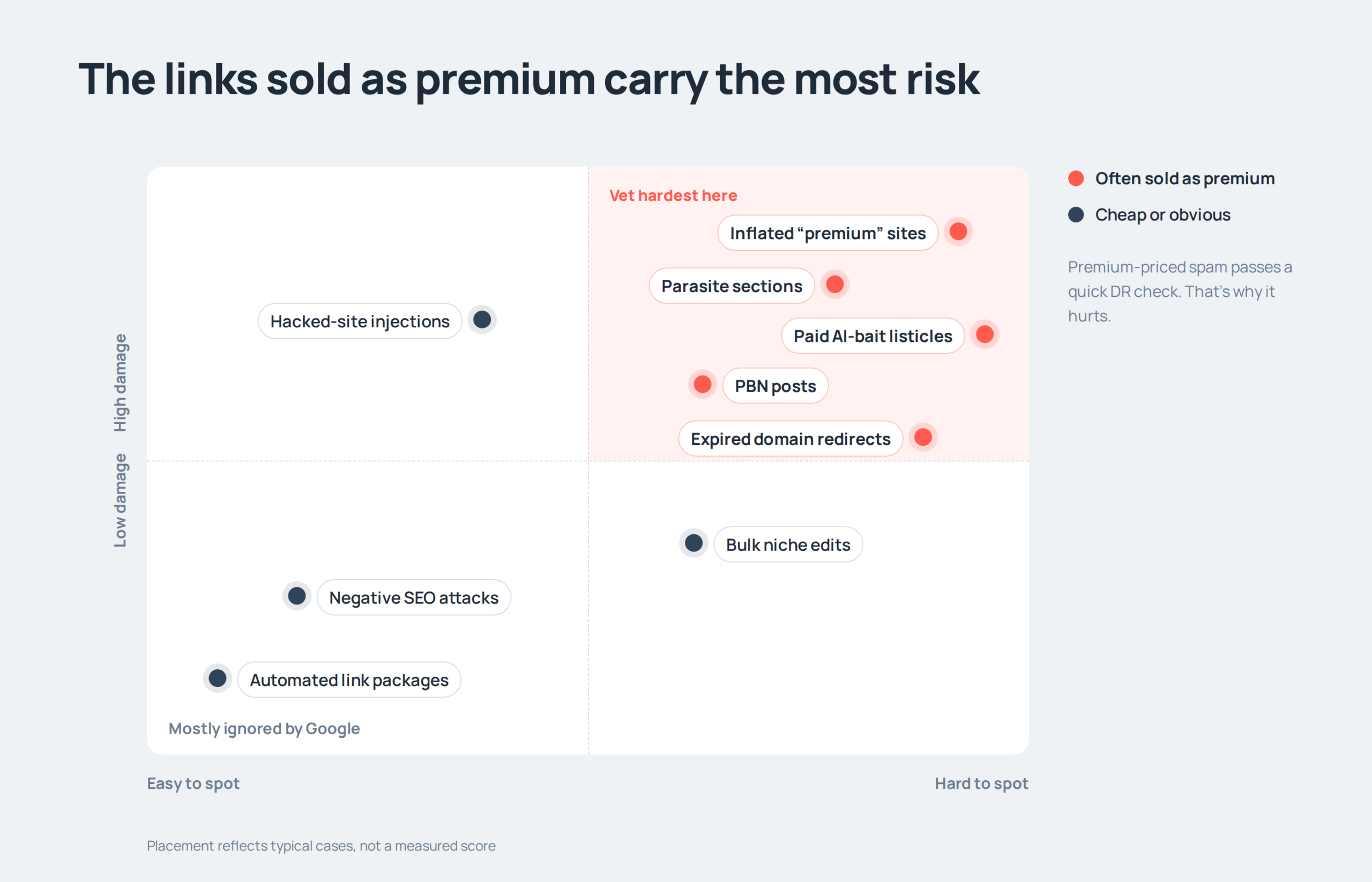
The cheap, obvious stuff is mostly ignored by Google. The real risk sits top right: links sold as premium that pass a quick DR check. That’s where your vetting time should go.
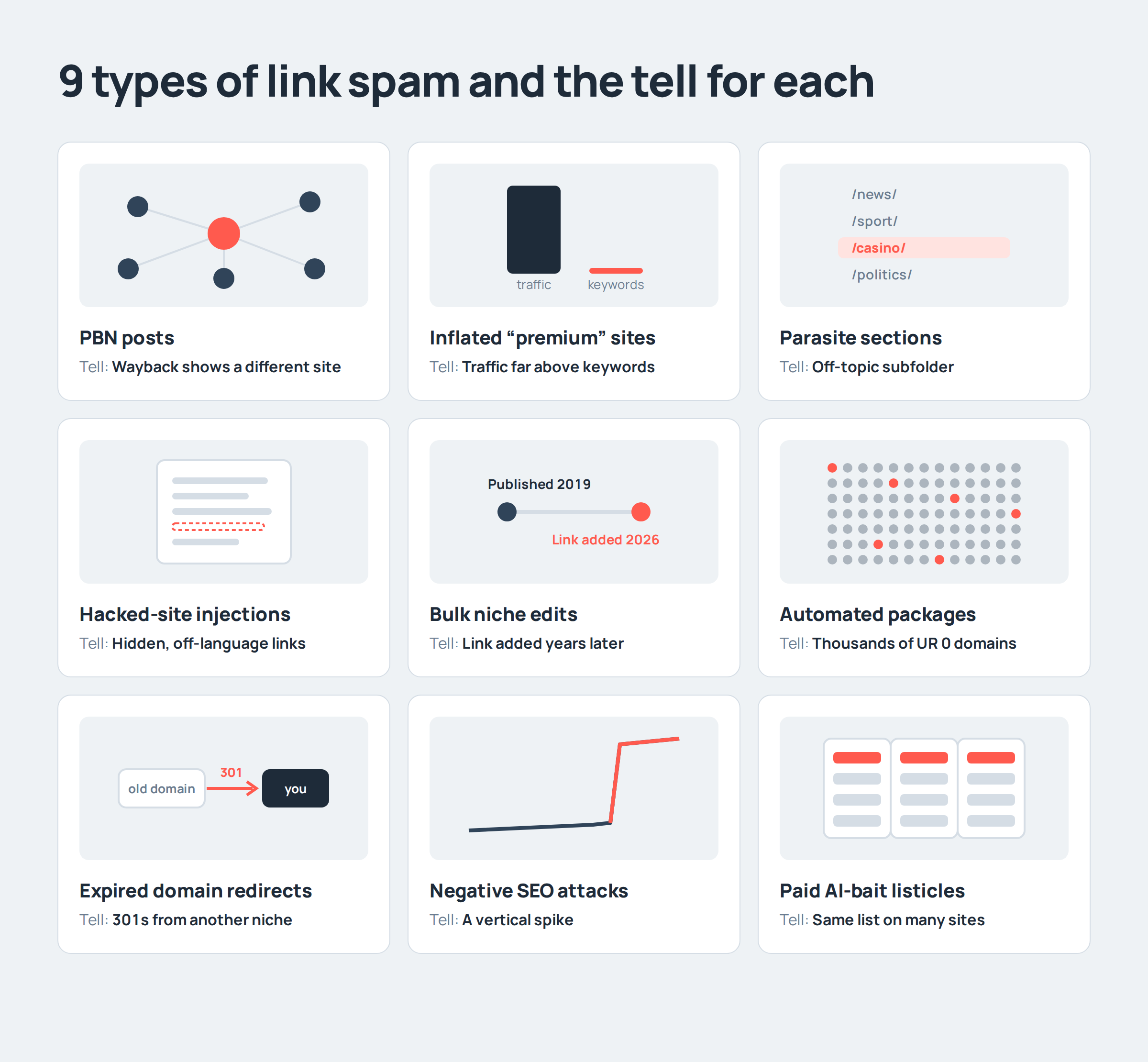
9 types of link spam and how to spot each one
Every type below gets sold to iGaming and crypto brands every week. The last column is the fastest check I know for each.
| Type | Where it comes from | How it works | How to spot it |
|---|---|---|---|
| PBN posts | Guest post lists, Telegram sellers, “high DR” bundles | Expired domains rebuilt as blogs that exist only to sell links | Wayback shows a different business. Outbound links to unrelated money sites. Same theme or host as other sellers’ sites |
| Inflated “premium” sites | Marketplaces, outreach emails with price sheets | DR pumped with cheap links, traffic pumped with bots or one lucky page | Traffic doesn’t match ranking keywords. DR history jumps while traffic stays flat |
| Parasite sections | Resellers of “news site” placements | A casino or crypto subfolder rented on a trusted news domain | A /casino/ or /crypto/ folder unrelated to the rest of the site. Google’s site reputation abuse policy targets this, so your link can vanish overnight |
| Hacked-site injections | Black-hat sellers, cheap “edu/gov link” offers | Links hidden in old, unpatched WordPress sites | Anchor or page language doesn’t match the site. Links sit in old posts with no editorial reason |
| Bulk niche edits | “Aged domain” insertion packages | Your link is dropped into old, unrelated articles in bulk | Link first seen years after the article was published. Many commercial links added to the same page |
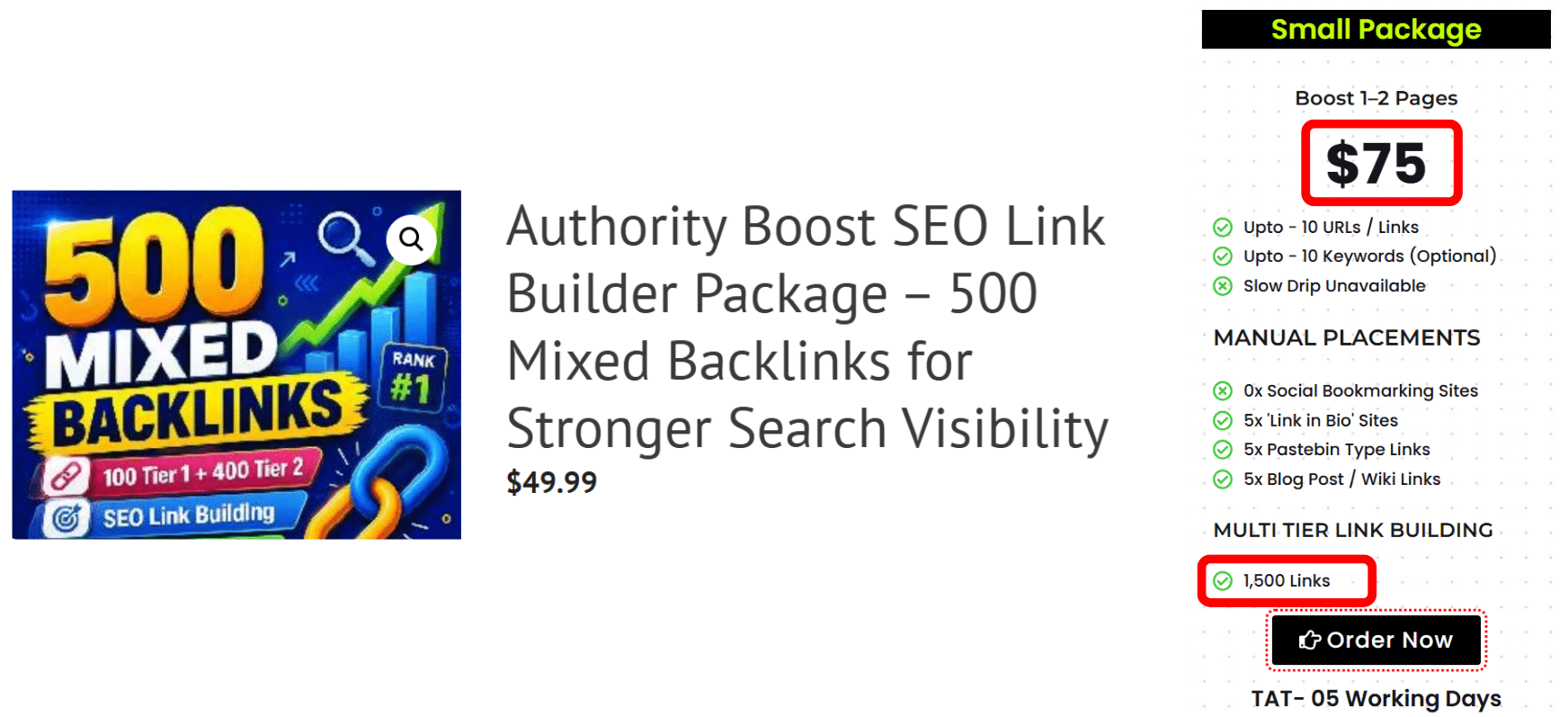
| Automated packages | Fiverr-style gigs, “500 backlinks for $49.99”, tiered GSA | Software posts profiles, comments and wiki links at scale, often in tiers | Thousands of referring domains with UR near 0. Forum profiles, comments and nofollow dominate |
| Expired domain redirects | Domain auctions, “authority transfer” services | An old domain’s links are 301-redirected to you | Ahrefs shows links as redirects from domains in a different niche. Google lists expired domain abuse as spam |
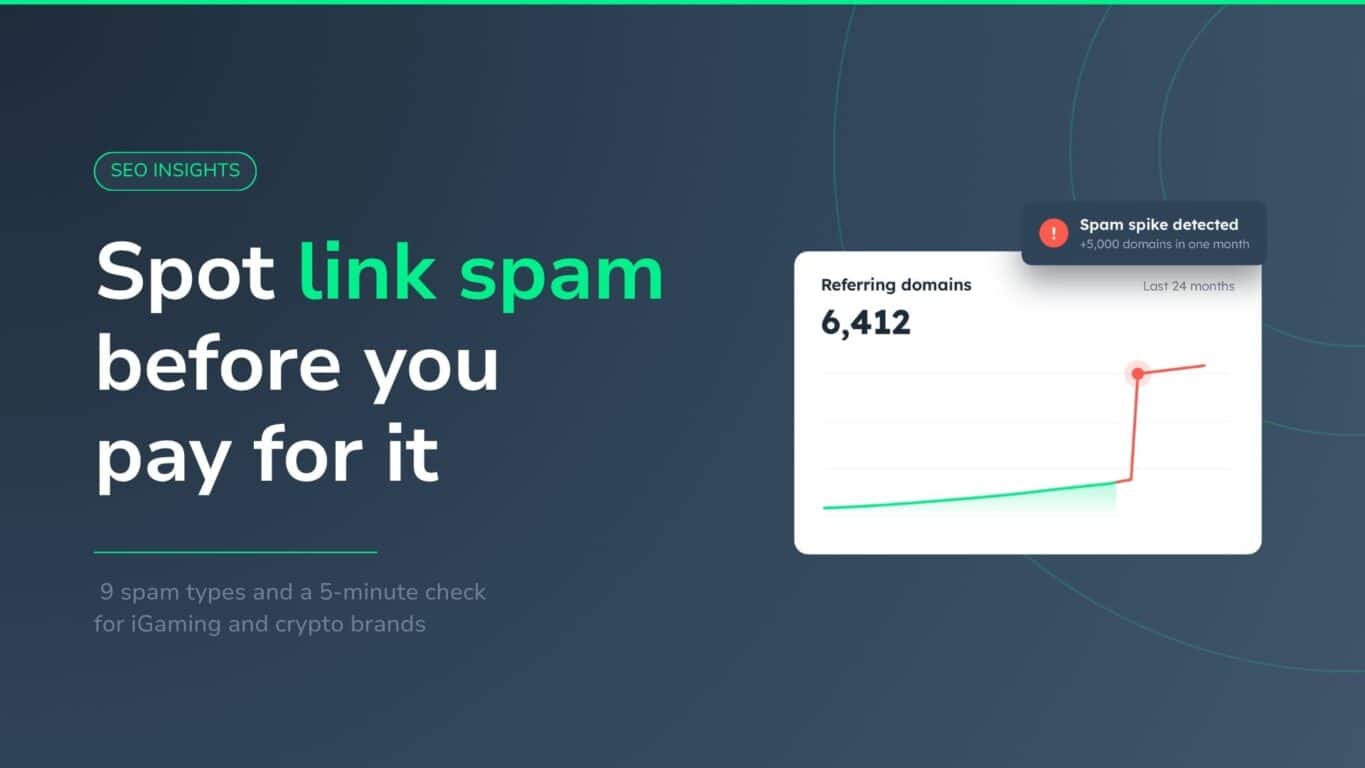
| Negative SEO attacks | Competitors, or spam sellers using you as a billboard | Thousands of toxic links pointed at you in days | Referring domains go vertical with no campaign behind it. Telegram handles, pharma or adult anchors |
| Paid AI-bait listicles | “AI visibility” or “LLM citation” packages | Your brand seeded into near-identical “best crypto exchanges” lists across many sites | The same list, same order, published on multiple sites in the same week. No sponsored label |
Three real examples
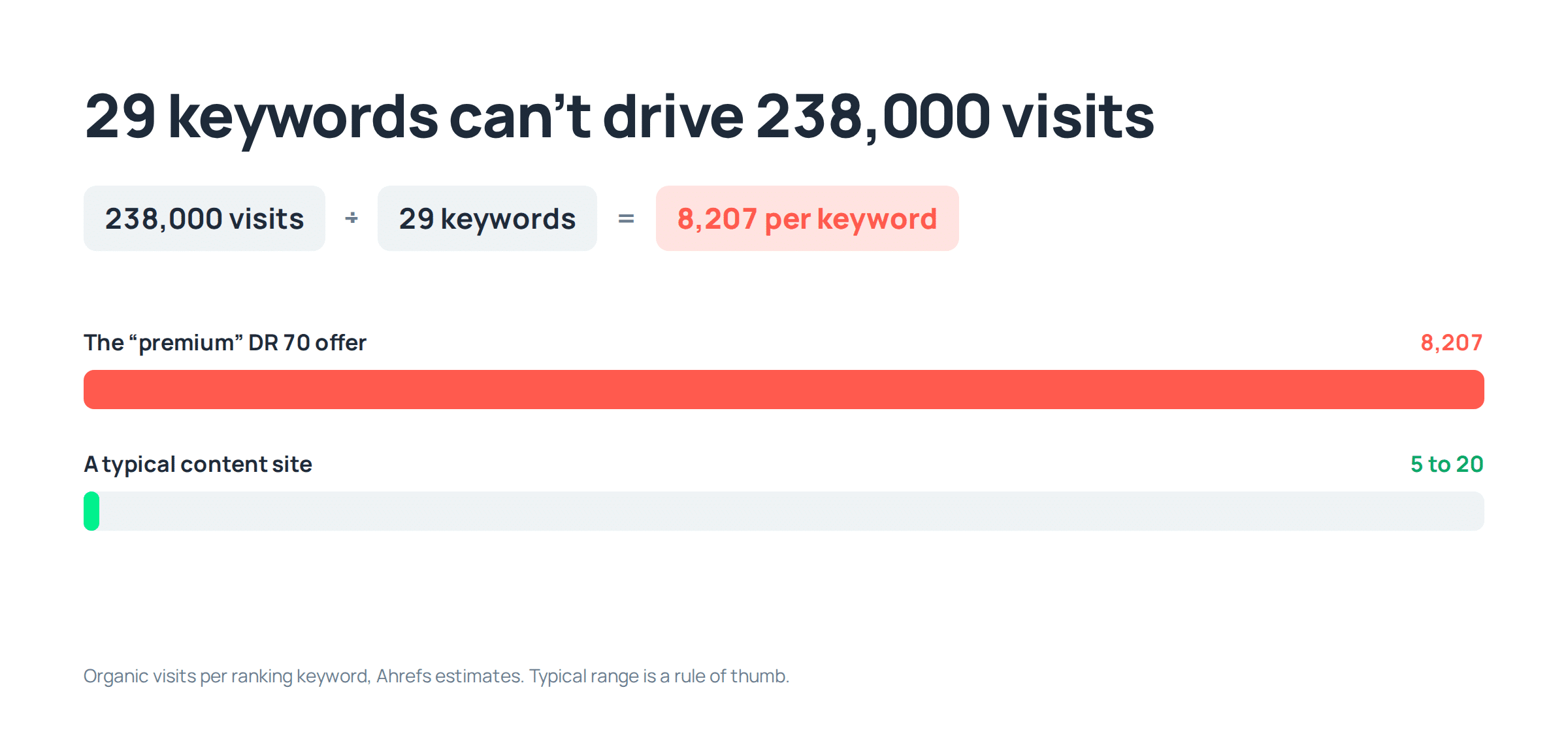
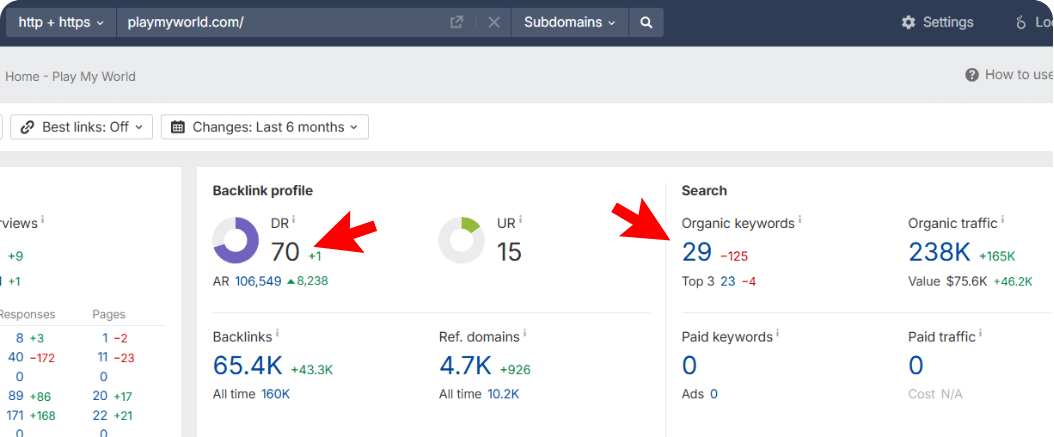
The “premium” placement that wasn’t. Two sites offered to a client as premium. One was DR 70, ranking for 29 keywords, claiming 238,000 monthly visits. The other was DR 56, ranking for 9. Twenty-nine keywords don’t produce 238,000 visits. That’s not an audience. That’s an anomaly.
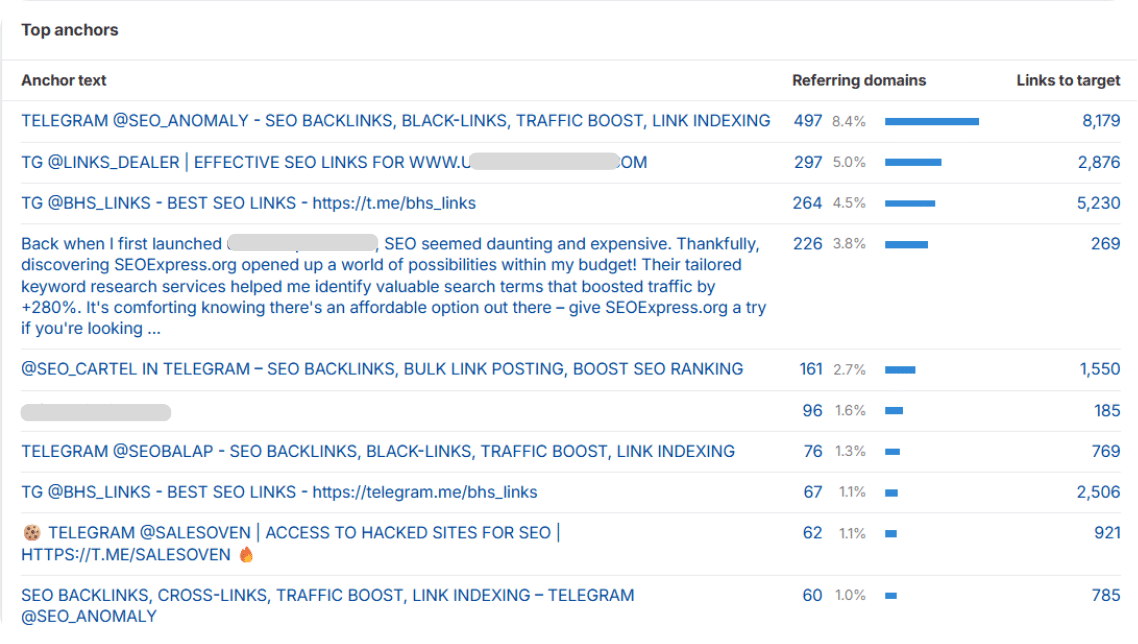
The billboard attack. A small site’s referring domains suddenly climbed. The new anchors were Telegram handles and phrases like “SEO backlinks”, “black links” and “link indexing”, and almost 90% of the links came from pages with a UR under 10. Nobody placed these for that site. It was free advertising space for spam sellers.
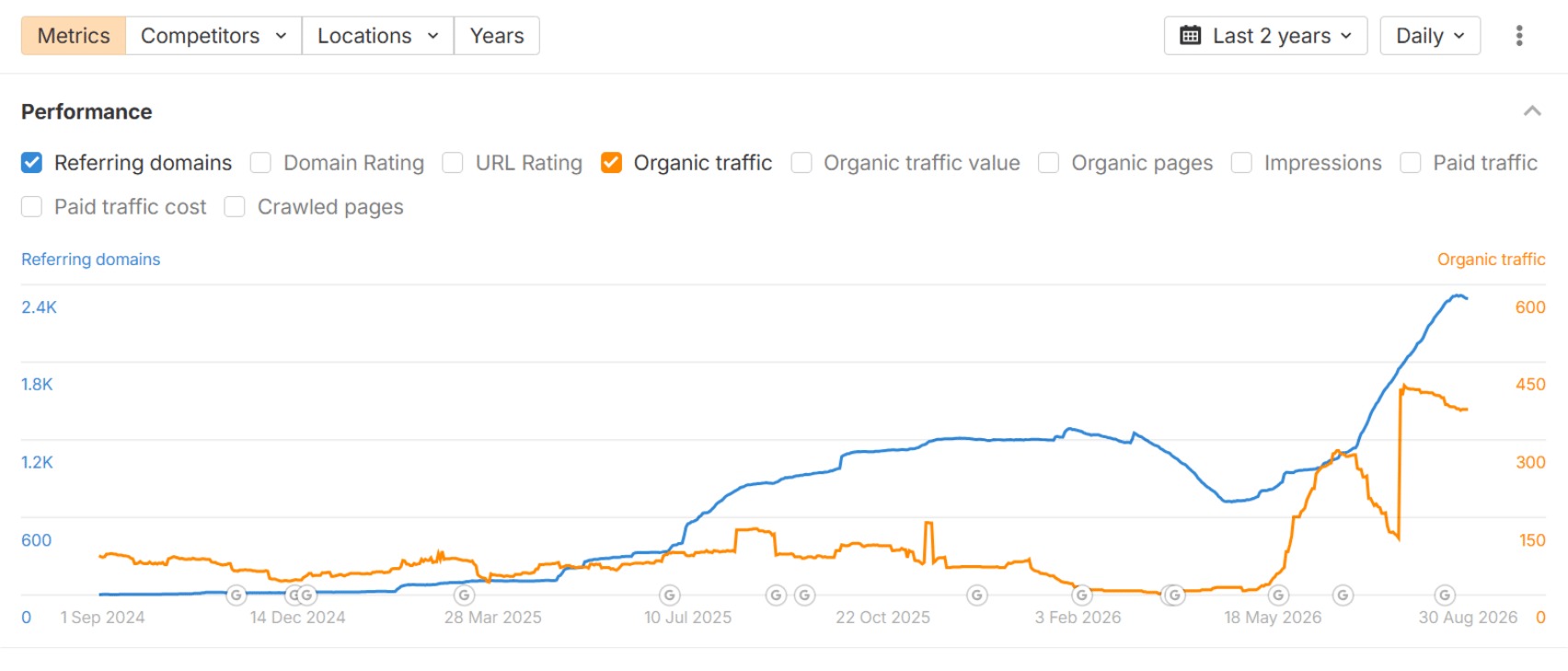
The package that delivered. In summer 2025, one site gained roughly 5,000 referring domains in a single jump. Traffic rose, wobbled for about a year, then fell off a cliff. The package did exactly what it promised: a short-term lift with nothing underneath it.
The 5-minute publisher check
DR tells you almost nothing on its own. These seven checks in Ahrefs Site Explorer catch most of the spam above before you pay. A simple rule: fail two, walk away.
| Check | How to read it in Ahrefs | Healthy | Red flag |
|---|---|---|---|
| Traffic per keyword | Organic traffic ÷ organic keywords (Overview) | Single digits to low tens for most content sites | Hundreds or thousands. 238,000 ÷ 29 ≈ 8,200 per keyword |
| DR vs traffic, 12 months | DR history next to the organic traffic graph | Both move together, or DR lags traffic | DR climbs while traffic is flat or falling |
| Referring domain velocity | New referring domains per month (Overview) | Steady, uneven growth | A month several times the site’s normal, with no news or campaign behind it |
| Outbound linking | Linked domains vs referring domains, then Outgoing anchors | Links out to sources and partners in its topic | Links out to far more domains than link to it, with casino, CBD or loan anchors |
| Topic spread | Top pages, sorted by traffic | 1 to 3 related topics | Cars on Monday, CBD on Tuesday, mortgages on Wednesday |
| Traffic geography | Organic traffic by country | Matches the site’s language and market | A Danish site with most traffic from countries it doesn’t write for |
| Its own anchor cloud | Anchors report | Brand name, URLs, natural phrases | Money keywords, foreign-language spam, Telegram handles |
Two checks outside Ahrefs are worth 30 seconds each. Open the Wayback Machine to see what the domain was before. And read one recent article: if no editor would sign off on it, nobody is protecting the page your link lives on.
Relevance beats DR. A DR 40 site in your niche is worth more than a DR 80 generalist. Google can tell the difference, and so can LLMs. In our Ahrefs study, domain authority got URLs into the consideration set, but content quality decided what actually got cited.
Protect your own profile
Spam doesn’t only arrive through links you buy. Set up three habits and you’ll catch most problems within a week.
- Set a New backlinks alert in Ahrefs for your domain, weekly. Skim it for anchors you’d never use.
- Watch the referring domains graph monthly. Legitimate sites attract links slowly. A vertical line deserves an hour of your time.
- Check your Tier 1 every quarter. Re-run the 5-minute check on sites already linking to you. A publisher that was clean last year may sell to everyone now, and that puts you one hop from their network.
If you’re already hit
- Diagnose first. Match the drop to Google’s update dates and your own link timeline. A content problem needs a different fix than a link problem.
- Stop the source. Cancel packages and drop vendors before anything else.
- Disavow narrowly. Target clear attack links and paid networks only. Panic disavows of everything with low DR often remove good links too.
- Replace with relevance. You recover by earning better links, not by deleting bad ones. Plan in months, not weeks.