Page rankings: A guide on how to get better online visibility
Jump to section [Open]
Have you ever wondered why your website seems to be invisible? Buried somewhere past page three, where few dare to scroll, we promise you’re not alone. For many, the ability to crack the code of online visibility can be like screaming into the void.
Search engines are tricky gatekeepers, with a specific combination of relevancy, structure, and trust. But don’t worry, we have some good news. You can find out what exactly they’re looking for when it comes to page rankings.
Just keep following this guide from our Bazoom team and get started on your way to getting to the top of those page rankings.
What you need to know about page ranking
Let’s get into it; page ranking is the silent driver that determines who is found and who isn’t on the internet. This is why it is a crucial fact that any website owner and marketer must know.
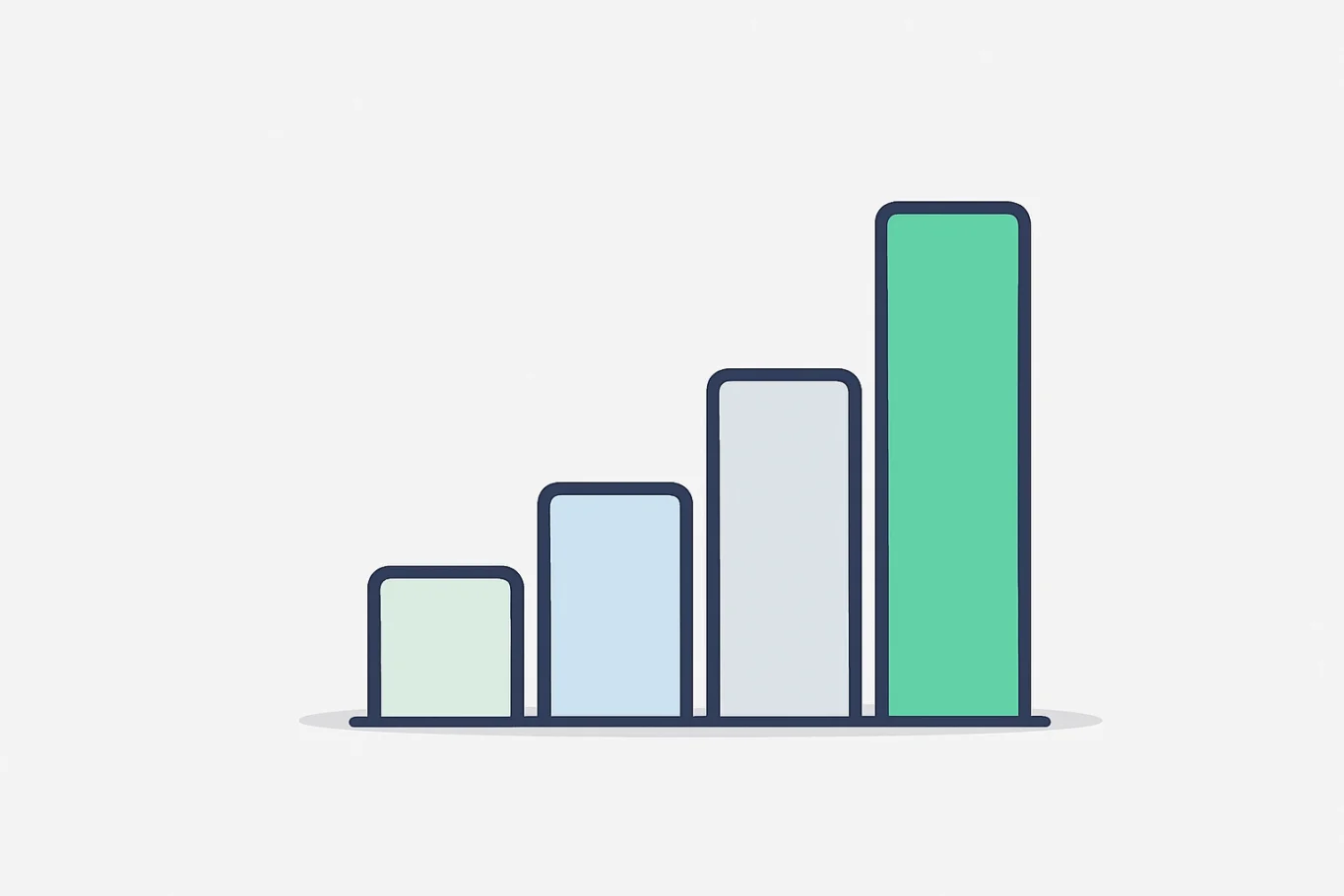
In its simplest form, page ranking is a method by which search engines determine which pages feature at the top of the results. But how did all this complicated ranking stuff start? It is essential to understand that PageRank computations require specific algorithms.
It was inspired by the original PageRank algorithm, known as Google PageRank, that views the web as a voting system. The pages gained authority through backlinks, a foundational concept that continues to shape how users improve their rankings on Google.
So that leads us to the following question: “How do search engines rank a site?” Search engines utilize both external and internal links to determine the significance of a page. Outbound links indicate credibility, and internal links help search engines understand how your content fits together.
In combination, these cues can influence a site’s search ranking and whether it climbs or remains in place.
For anyone trying to improve their Google rankings or learn how Google ranks websites, half the task is learning to read and interpret ranking signals. At that point, Bazoom becomes your friend with all the answers.
How page ranking algorithms have changed through time
Page ranking long before the emergence of the marketing buzzword SEO, changing the internet in the process. It was developed in the late 1990s by two Stanford students, Larry Page and Sergey Brin, the founders of Google.
Before PageRank, most search engines relied on techniques such as keyword density and page-scanning, which made search results manipulable and less valuable. PageRank revolutionized this by ranking a site’s importance based on the quality and quantity of links to it, creating a more reliable Google ranking system.
Over time, however, complex problems arose as Google unleashed innovation after innovation, and websites learned to game the system by using link farms and other historical SEO methods.
This is when the algorithm entered the game, encompassing user behavior, content quality, mobile device compatibility, and semantic comprehension. Now, search isn’t just a matter of matching words – it is about understanding intent and rewarding reliable, trustworthy content.
The results of this? An even more difficult-to-cheat modern ranking landscape. That said, if you want to keep your website competitive as Google’s ranking systems continue to evolve, let us guide you with our state-of-the-art Bazoom platform.
How PageRank calculates authority
PageRank and Google know which pages on the internet are most valuable. It functions by browsing links the same way that we do in real life when using recommendations. Linking one site to another is a thumbs-up from Google, in terms of confidence.
Note that not every thumbs-up is created equal. However, links from reputable, authoritative sites carry more weight. This made Google rank the site more precisely than its rivals.
PageRank begins by analyzing page structure. Throughout the web, every page has a score based on the quality and number of links pointing to it. An essential element of the site rank factors formula is the damping factor, which assumes that a user who clicks a link will eventually end their browsing.
This means there is no concentration of authority on any single page to avoid runaway power, and it allows for a more realistic distribution of ranking power. The outcome is a subtle framework for ranking site factors that determines a page’s position in search engines.
For any company seeking to gain visibility, these mechanics can be much less opaque when understood correctly. Understanding how Google ranks sites is key to developing an advanced page-ranking strategy and securing relevant backlinks.
With this view, you can gain a more informed understanding of how your website is performing and adjust PageRank values, while venturing into advanced page rankings without fear.
Would you like to learn more about how your link profile affects your visibility? In that case, our Bazoom platform can provide tools that break down these tricky variables.
Why do rankings change over time?
Have you ever looked at your rankings and said, “Wait, why did that change?” This is because Google finds new pages and links. It then recomputes each page’s importance using the revised link network.
After that, it rebalances authority, with some connections becoming valuable and others becoming dissolute or simply not worth your time. This process is repeated continuously and affects your PageRank.
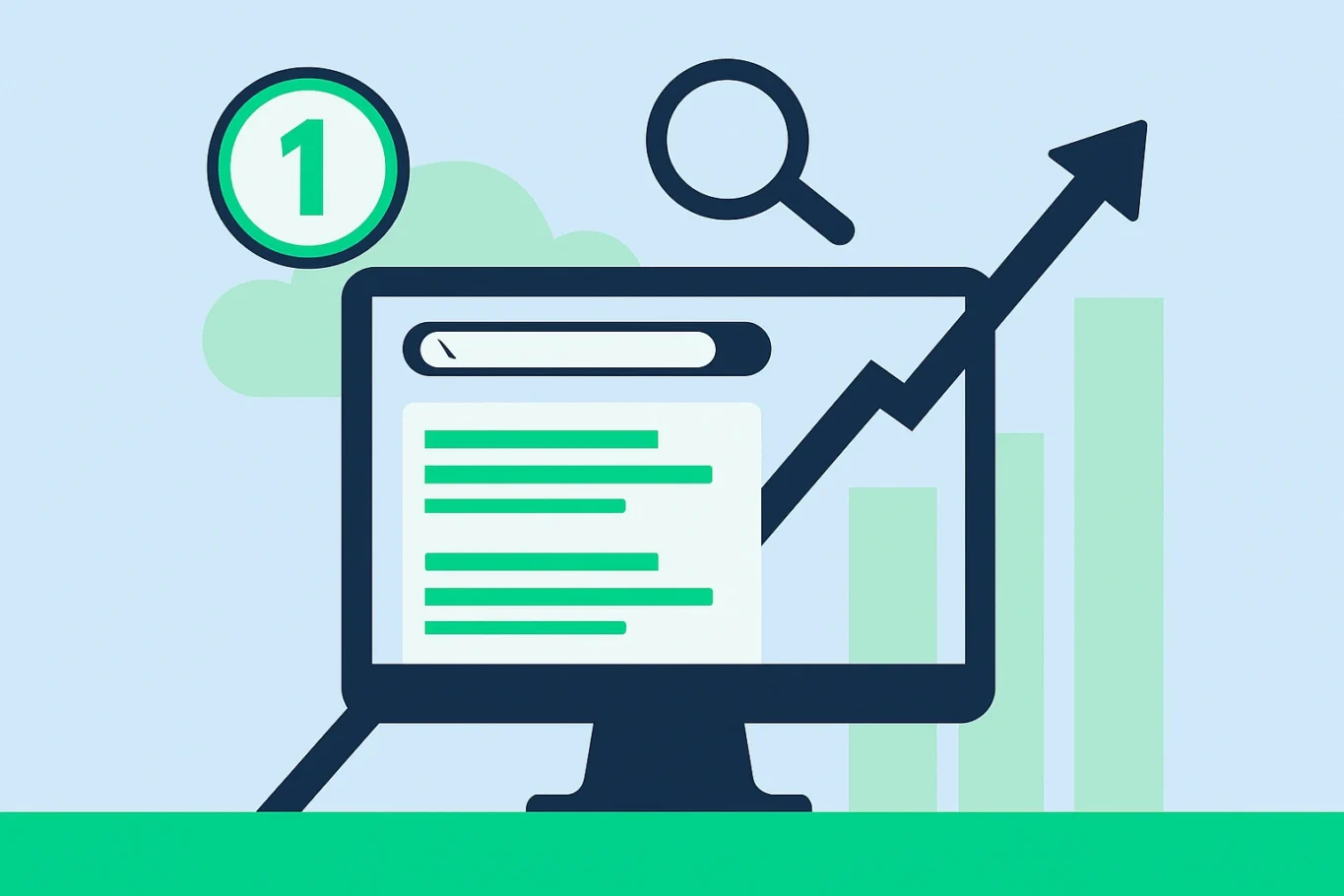
Rankings often don’t jump overnight, and we’re afraid it’s no short-term fix. You are in the long game of SEO improvement. New articles need time to crawl, fresh backlinks to be identified, and internal links to appear.
This is why patience and consistent work can help you receive actual mentions. You must have a definite method of tracing this flow. Our experts at Bazoom will help you simplify measuring your page ranking.
Inbound links: Quality vs. quantity
The ancient myth of backlinks is that more is better, whereas quality backlinks are what truly matter. This myth has obviously outlived its welcome as far as we are concerned. Search engines do not treat all inbound links equally; in fact, many poor-quality links can be detrimental.
Moreover, citing a single authoritative, relevant site can do much more to improve a web page’s ranking than dozens of links from low-quality directories or spam-filled blogs. Google has now mastered the art of telling the difference remarkably well, rewarding credibility and silently overlooking, or even punishing, suspect links.
With that in mind, low-authority or spam-filled links may pull you down. They are also sending a signal to Google that your site may be associated with low-trust areas of the web, which can paralyze your visibility or even turn the tide.
Alternatively, earning a thoughtful link from a trusted site in your niche signals to Google that you are worth consideration. These links contribute to Google ranking improvements and domain authority score over time, aligning with the essential PageRank values.
But how can you monitor your website’s rankings without losing focus? It is made manageable by our team at Bazoom. Our tools enable you to identify the sources of your incoming links, evaluate their quality, and identify future opportunities.
A well-planned link strategy, combined with the right tracking tools, can gradually build a backlink profile that increases not only trust, but also visibility.
Learn how to increase rankings with internal linking strategies
One of the behind-the-scenes SEO tools is internal links, which quietly do the heavy lifting.
Imagine turning every internal link into a pathway: The more evident and purposeful your pathways are, the more Google can understand what is in your content and your website’s position on Google search.
An effective internal linkage policy begins by determining your core pages, the pages that you need to rank in Google.
After you have identified them, seek ways to connect with them organically through other pages. This not only improves your Google page ranking but also helps people learn more about what you have to offer.
User experience is usually enhanced by internal linking. Easy-to-use navigation, distinct sections, and connections allow visitors to spend more and search more. More interaction means search engines are more likely to copy. If you have ever asked yourself, “How to find my Google site rating?” or “Where does my site show up?”, a refined internal structure is a good place to begin.
That said, our Bazoom team is here to help you. You can build smart relationships across your site and gradually expand your presence where it is needed most.
Applying PageRank wisdom to today’s SEO
Although Google no longer displays public PageRank scores, its blueprint is still used in search results. But what is PageRank in today’s SEO world, and how does it affect the question of “how is my website ranking on Google?”
PageRank’s trust, relevance, and authority are still used to guide current SEO. If you have ever wondered how to see my website rank on Google or why some of your competitors always seem to be one step ahead, it comes down to the same fundamentals.
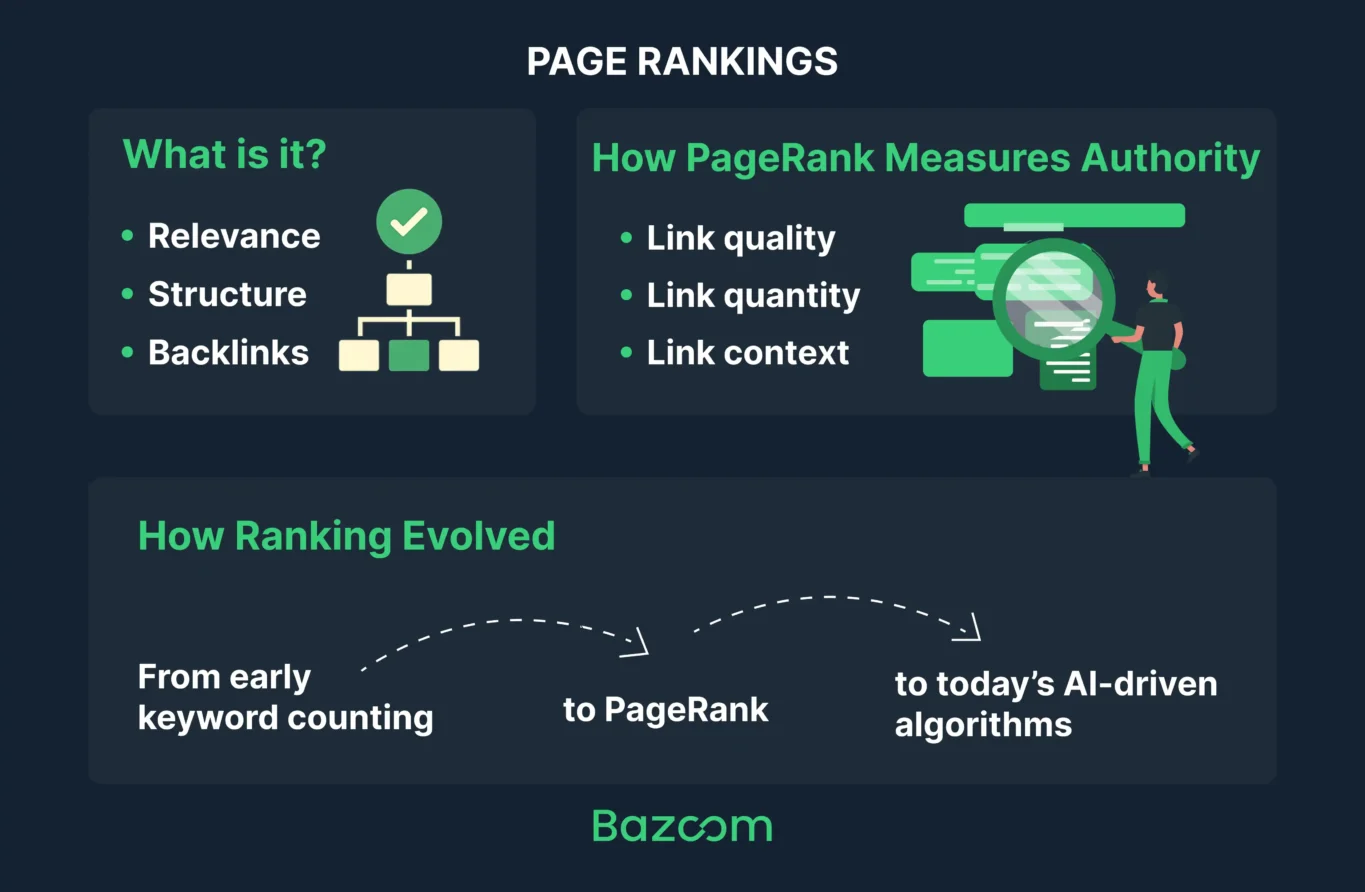
Now we understand that Google incorporates millions of signals: Content quality, user behavior, and technical performance. But the biggest ones are the same: Win the trust, be great at answering questions, and be suggested by reliable websites.
This is why clever link building, considerate internal linking, and great content still flourish. They stay true to PageRank. To answer those questions of “how to view my own website ranking?” or “view my own website ranking?”, begin with the basics.
Your plan should look like this: Produce content that actually helps people, ensure your site structure allows users to crawl, and get links from sources in your particular niche. For example, your homepage’s Google ranking advantage can help drive traffic to deeper pages. Simply put, this is PageRank logic wrapped with modern SEO strategy and expectations.
You can use our ranking checker on the Bazoom platform to track Google search website ranking or answer the question of “How to rank my own website?” Alongside improvements to your pages and the strength of your link profile.
Tip on how to stay ahead
The algorithms at Google never stand still. They are constantly evolving, but today they are dominated by machine learning and user intent understanding. To succeed in SEO, you have to remain edgy and flexible.
Here are some tips from our team to be on the ball with the evolving Google updates:
- Monitor key changes like E-E-A-T and mobile-first indexing
- Check variations in performance regularly
- Conduct regular SEO audits to identify problems
- Apply analytics to know the actual user behavior on your site. This can help you answer the question: “Find my site ranking in Google”
- Follow standard news sources in the field of SEO
- Refresh content regularly to ensure it is current, useful, and competitive
- Enhance your internal linking and backlink techniques
If you weren’t convinced enough yet to use the Bazoom platform, listen to our expert tell you the exact blueprint of our team:
“Our mission is simple: To make link building easy, effective, and accessible for everyone. Whether you’re a local business, a rising startup, or a global enterprise, we’re here to provide the tools and support you need to succeed. Your growth is our priority.”
– Nicolai Klausen, Founder at Bazoom Group
Tracking tools and insights from Bazoom will help you monitor Google’s changes, adjust your strategy, and keep pace with its requirements.