Relevant backlinks: Your roadmap to sustainable SEO
Jump to section [Open]
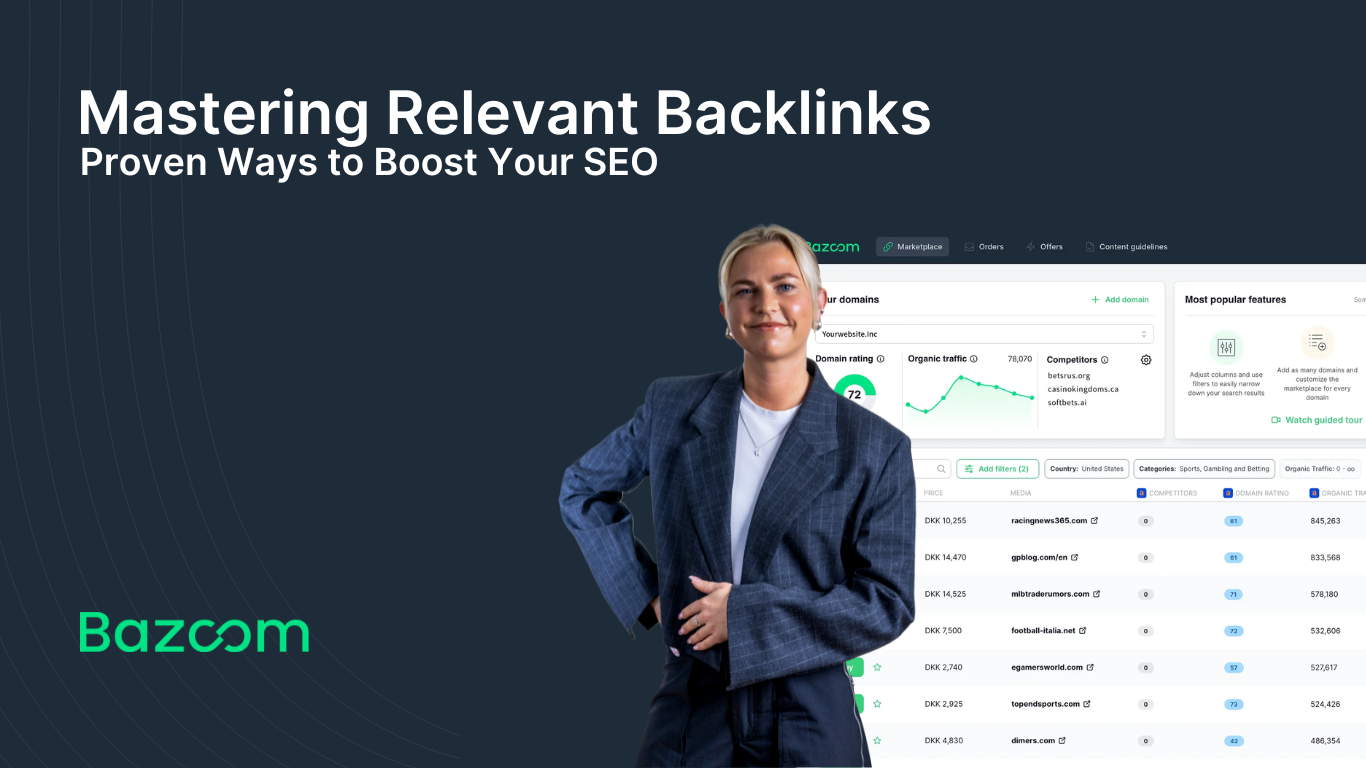
Backlinks play a huge role in shaping how visible you become in search results online. If another site points to yours, that link acts as a signal of trust. It creates authority and value. But not all backlinks add up the same. You see, the real game changer is relevance. When a link comes from a site within your industry or a closely related niche, it carries far more weight than a random mention.
If you care about visibility that actually lasts, building relevant backlinks is the foundation that keeps your SEO steady and effective.
What are relevant backlinks – and why do they matter?
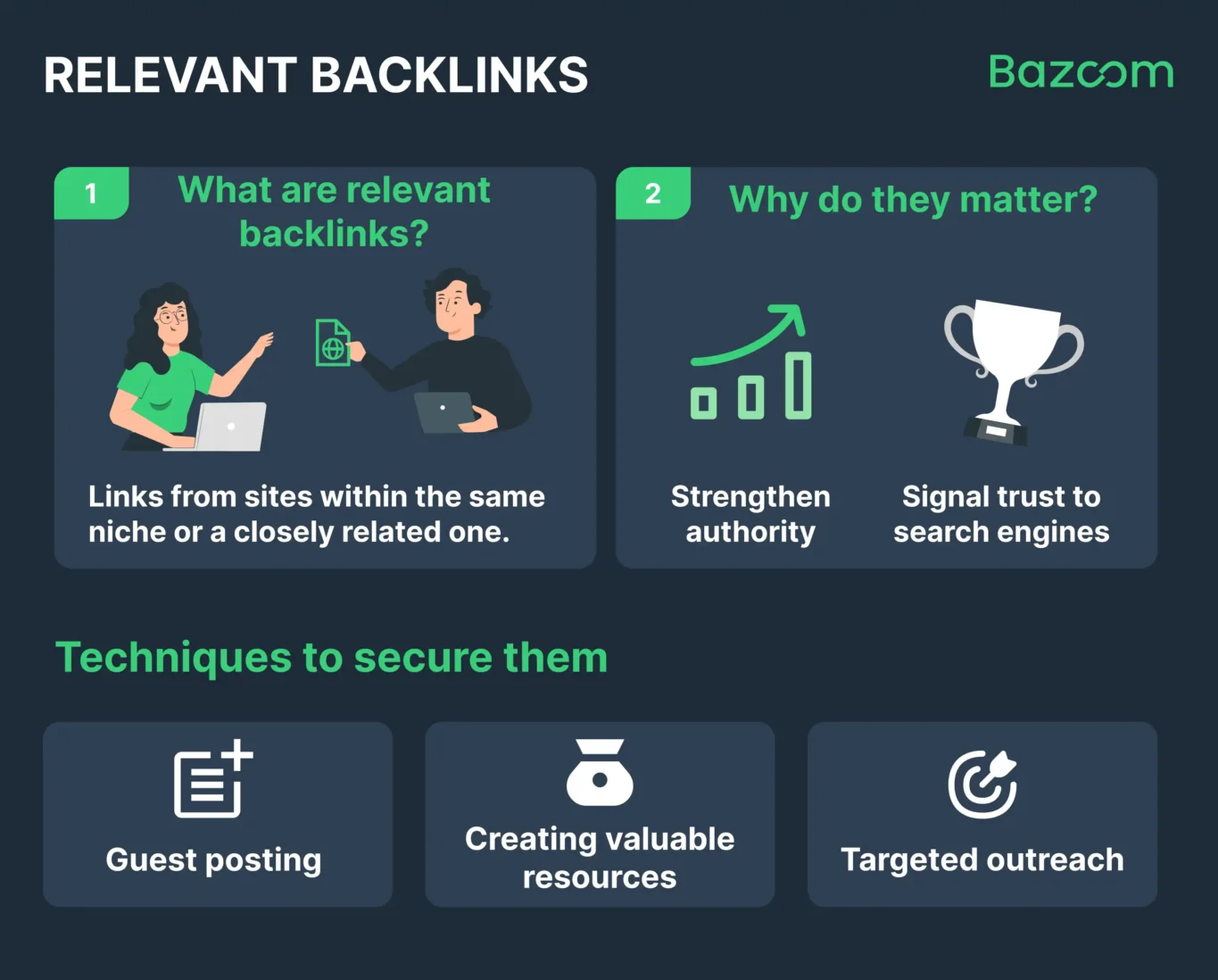
What are backlinks? Relevant backlinks are links that come from other websites operating in the same niche or a closely related one. Separate the term to fully understand it. Relevance is for specific and aligned information, known as relevant content. Backlinks stand for those digital connecting links. For example, if you have a fitness blog and a health-focused media site that links to your workout guide, those are relevant links. This relevance tells search engines that your content sits within a subject that has a clear focus. It also shows that you create content that is supported by sources your ideal audience already trusts.
Trust and authority are key factors behind backlinks. Readers naturally place more trust in your site when they come through a recommendation. This recommendation must be from a credible and aligned publication.
Backlink importance is high for search engines, too. Search engine rankings want to see logical and well-connected paths between relevant websites. If a link supports your topic and fits into the bigger picture of your niche, it tells search engines to trust you. Plus, it says that your site deserves attention and authority, even on high domain authority sites. A link relevant approach is a must, as are authoritative links on your own site.
That’s the focus of relevant link building efforts – building a profile of backlinks that actually make sense and to build relevant links. Here at Bazoom, we know backlinks like the back of our hands. We focus heavily on relevance when matching clients with link placement opportunities. We ensure growth feels natural, credible, and aligned with search engine expectations. If your goal is upward movement, relevant links are non-negotiable, and we can help you with that today. Valuable links are vital.
How search engines assess the relevance of your links
Google, Google Search Console, and other search engines look at the relationship between the linking page and the page it points to. They don’t just look for any backlink. Link relevance becomes clear through topical alignment. A good backlink is one that covers a similar topic, that’s what quality, value, and link relevance is.
Search engines use on-page signals, surrounding content, anchor text, and overall context to say whether a link is natural. Digital crawlers, search operators, and algorithms look for these high-quality links all the time. When the anchor text reflects the content you deliver, that connection gets stronger.
Google search operators’ guidelines emphasize this natural integration. They have no space for forced or manipulative practices, such as spammy links. These can lead to search engine penalties, as they can be paid links. Organic relevant backlinks and relevant keywords are key, and here are Bazoom, we can assist you with this. Organic traffic is a big focus for us.
Picture an example of a good backlink: A sustainable living magazine linking to a guide about eco-friendly home products on news sites. The niches overlap, the context fits, and the exact match anchor text explains what users will find. Go through the checklist, and you’ll see it’s a perfect match.
This is the kind of strategy we excel at. Here at Bazoom, we work to secure high-quality backlinks, relevant backlinks, placing your content where it actually makes sense. We know it needs to align with the publisher’s audience and comply with best local SEO practices. Get in touch with us, and we will assist you.
Discover proven techniques to secure authority-boosting links
Are you asking yourself how to get relevant backlinks to your website and how many links you need? There are several tried-and-true methods at your disposal if you want to get safe, relevant backlinks to your website. These techniques focus on three things: Earning trust, building relationships, and placing your content where it genuinely adds value.
Here are some practical ways to get relevant backlinks:
- Guest posting on reputable sites: When you contribute well-written articles to high-quality publications in your niche, you earn exposure and a relevant backlink. Look at all the sites that are reputable websites and have website authority.
- Creating valuable resources: In-depth guides, data studies, templates, or tutorials attract organic attention. This allows authoritative websites SEO to reference your material naturally.
- Targeted outreach: When you reach out to influencers or editors, you increase your chances of meaningful collaboration. Or even similar subject matter on relevant sites. Simply ensure your information is relevant for a website’s link or web pages.
- Explore PR-style opportunities: Respond to journalist inquiries through platforms like HARO or by connecting with reporters covering your industry. These links tend to be highly authoritative and safe, relevant backlinks that last.
The real key here is strategy, which is something we know a lot about. Random placements don’t help as much as targeted, relationship-driven link building. You want each link to come from a place that genuinely connects to your niche. Consistency is the key to this strategy and approach. You must contribute value and reach out to other sites that match your expertise. This is how you build a steady stream of authority-boosting and relevant backlinks. Please note that this takes time; high authority links come with patience and expertise.
Here at Bazoom, we can step in to support parts of this process. We can take over from the start of outreach to tracking progress later on.
“We’re here to assist you in any way you need, and we will find link opportunities for you. SEO is our focus, and it should be your focus as well. By merging these techniques for finding highly relevant backlinks and our own expertise, you are on the way to becoming an SEO savvy business.”
– Nikolaj Østergaard, Co-Founder at Bazoom Group
Why link diversity counters manipulative tactics
What is a good backlink? One that’s aligned and natural. A natural backlink profile includes different types of sites, placements, and formats. That variety builds trust and helps avoid the appearance of manipulation or the idea of spammy links, broken links, or hidden links. A diverse link profile is paramount.
If your entire link profile is made up of similar-sounding guest posts from the same type of sites, search rankings and engines may see that as a red flag. To find more balance, you need to merge different types of content. Consider these to create more authenticity.
- Editorial mentions, editorial links, and niche edits
- A niche blog post on relevant industry blogs
- Industry directories
Relying on one tactic alone creates risk. It might make sense to you, feel quicker to implement, and be less of a headache, but it’s not an effective long-term plan. Short-term plans include many directory links, which can look forced and unnatural. Too many of the same kind of article placement does as well.
We know that a good backlink strategy uses a mix of sources. We help our clients achieve the much-needed variety. We do this by focusing on high-quality sites from different segments of a niche. You see, niche relevant backlinks are key. We complete the relevant link building strategy for you, including broken link building. We know backlink importance comes first, as does link relevancy.
Common pitfalls in backlink acquisition
Mistakes often happen with finding relevant backlinks if you don’t know what you’re doing. That’s why you need an expert agency like ours to help find safe, relevant backlinks and outline important pitfalls. Some pitfalls involve choosing low-quality sources and buying backlinks that are not aligned. Other pitfalls come from engaging in manipulative tactics or trying to buy your way through the process. We’re here to make sure this does not happen to you. We’ll always check spammy backlinks and unfair tactics on your behalf.
If you’re still questioning this, try to understand the two major pitfalls below, namely low-quality backlinks and the steps you can take to clean up harmful links.
Risks of low-quality backlinks
Low-quality backlinks can work against your efforts and hurt your rankings. Links from spam-heavy sites, link farms, or non-curated forums weaken your profile. The goal is to strengthen it. Some sites exist solely to exchange links, like link exchange schemes, without offering real content or editorial standards. Those might sound tempting, but they can damage your credibility quickly, as link relevance plays a role.
If you find links pointing to you from irrelevant or suspicious sources, those may impact how search engines view your authority and whether it’s high authority or low authority. The search engine’s final decision is critical to your online success. That’s why regular monitoring matters. We can help check spammy backlinks to help ensure your profile remains clean and trustworthy.
Our SEO tools and expertise come into play here as we can help with finding relevant backlinks and also safe relevant backlinks.
Identify and disavow harmful backlinks
Once you identify harmful backlinks, the next step is addressing them. You can assess inbound links by checking their domain quality, topical connection, and overall legitimacy. If a link comes from a completely unrelated niche or carries visible spam signals, then you should disavow it.
Google’s disavow tool lets you tell the search engine to ignore these harmful sources. The process requires caution. Why? Disavowing the wrong links can remove value rather than protect it. Bazoom provides guidance and resources if you’re unsure about this process. We have the tools to check spammy backlinks or irrelevant links, helping you determine which links should stay and which ones need to be removed. We know the value of your visibility, and it’s our job to protect and enhance it.
“We are here to help you. It’s not easy to monitor backlinks, and it’s not simple to understand which links are working for you and which are working against you. We are experts in this, which is why we’re here to offer you top-notch tools and intervention strategies that will help your business thrive.”
– Tamara Novitović, Head of SEO at Bazoom Group
Measure the impact of your efforts
Tracking your progress is essential for understanding what’s working and what needs adjustment. You need to identify websites that work for you. When you invest in quality relevant backlinks, you want to see their impact on real-world performance. The good news is that you have several clear metrics you can analyze to measure results.
- Organic search traffic: If your efforts are paying off, you’ll likely see steady increases over time.
- Keyword rankings: These tell another part of the story. If you see your targeted terms climbing in the search results, that’s a strong signal that your quality relevant backlinks are doing their job.
- Referral traffic: This allows you to see which backlinks are sending users your way.
- Engagement metrics: Data such as bounce rate, pages visited, and conversion patterns help you understand whether the traffic you’re gaining is high-quality.
Ongoing analysis gives you a better sense of which strategies deserve more attention and which ones might need refining. Bazoom supports this stage with performance dashboards and analytics tools designed to simplify tracking. This helps you stay informed and focused on long-term improvement.
Are you still asking yourself, “What are backlinks?” You should be getting a better idea of it now. If not, keep reading to find out more or get in touch with us, and we’ll give you the blow-by-blow again.
Sustaining growth with a long-term backlink strategy
Once you build a solid foundation of relevant backlinks, your next job is maintaining that forward motion. Since SEO evolves constantly, your strategy should grow with it. We can help you with this, as we know this can be time-consuming. Frequent backlink audits help you stay aware of shifts in your profile and ensure nothing harmful sneaks in. Again, something we can assist with.
Algorithm changes happen regularly, so it’s smart to keep an eye on industry updates and adjust your approach when necessary. Quality content always remains the backbone of a strong strategy. If you continue producing value-driven content, you’ll naturally encourage others to link to you.
Sustainable growth takes consistent effort, but it pays off. You can build strong, relevant backlinks that support visibility and long-term trust. Especially if you stick to best practices and work with a partner like us here at Bazoom.
We know a good backlink when we see one, and we’ll make sure your sites are filled with them. So if you’re asking yourself how to get relevant backlinks to your website or what a good backlink is, then stop worrying. We’re here to take control of all of that for you.
Take action: Your next steps in establishing relevance
If you want to build a lasting presence online, your backlink approach needs to be intentional. It must be filled with relevant links, safe relevant backlinks, and rooted in value. The steps you take today lay the groundwork for future success. The steps you take with us will take you to the next level. Developing your own content that genuinely helps your audience, avoiding manipulative tactics, and conducting ethical outreach all add to strong, relevant link building.
Make it a habit to monitor your backlink profile regularly, identify risks early, look at your anchor text, and remove harmful links when necessary. Keep your strategy aligned with your niche, and focus on building relationships with credible publications.
Our services as one of the most informed link building agencies can guide you through each stage of the process in your link building journey, while we’re your link builders. You must stay consistent, informed, and strategic. That’s how you’ll create a backlink ecosystem that elevates your visibility year after year.