The Complete SaaS Link Building Guide: 15 Strategies That Actually Work
Jump to section [Open]
Building links as a SaaS company isn’t just harder than it used to be, it’s a completely different game. While your B2C counterparts can get away with lifestyle content and broad appeal tactics, you’re competing in a space where every click costs more, every keyword is fought over, and your audience expects deep technical expertise.
Here’s the reality: SaaS link building requires a fundamentally different approach. You’re not just trying to rank for “best project management software”, you’re building authority in a crowded market where prospects research for months before converting, where trust signals matter more than flashy content, and where one well-placed link from the right industry publication can drive more qualified traffic than dozens of generic placements.
The good news? SaaS companies have inherent advantages that most industries don’t. You generate data. You solve real problems. You integrate with other tools. These assets become link magnets when you know how to leverage them properly.
This guide breaks down 15 proven saas link building strategies that work in 2024. Not theoretical tactics, strategies we’ve seen drive measurable results for SaaS businesses ranging from early-stage startups to enterprise platforms. Each comes with implementation steps, timeline expectations, and the metrics that actually matter.
Looking to make your link building journey easier? Check out our guide on the best place to buy backlinks!
Why SaaS Link Building Is Different (And Why That Matters)
Before diving into tactics, let’s address why generic link building advice falls short for saas companies.
Your audience researches differently. B2B software buyers don’t impulse purchase. They read case studies, compare features, and check integration capabilities. This means your link building efforts need to target decision-makers who consume content throughout a longer buying cycle.
Competition is fierce. Search engine rankings in SaaS categories often determine market share. The difference between ranking #3 and #8 for “email marketing software” isn’t just traffic, it’s millions in potential revenue. This drives aggressive competition for quality backlinks from authoritative websites.
Trust signals are everything. SaaS buyers need to trust you with their business data. Links from reputable websites, industry publications, and established tech blogs carry more weight than generic directory listings or lifestyle blogs.
You have unique link-worthy assets. Unlike many industries, SaaS companies naturally generate linkable content: integration guides, API documentation, usage data, customer success stories, and product comparisons. The key is turning these assets into systematic link acquisition.
Building a SaaS Link Building Campaign
Every successful saas link building strategy starts with three foundational elements: competitor analysis, asset inventory, and target identification.
Competitor backlink analysis. Use tools like Ahrefs or SEMrush to analyze the top 3-5 competitors in your space. Look for patterns: Which types of sites link to them? What content earns the most quality backlinks? What’s their dofollow to nofollow ratio? This analysis reveals both opportunities and realistic benchmarks for your own link building campaign.
Inventory your linkable assets. SaaS companies often underestimate what they already have. Customer data becomes industry reports. Integration documentation becomes how-to guides. Product comparisons become resource page fodder. List everything you could turn into link-worthy content.
Identify high-value targets. Focus on three categories: industry publications that cover your space, SaaS review sites and directories, and complementary tools in your ecosystem. Prioritize based on domain authority, traffic relevance, and audience overlap with your ideal customers.
Content-Based Link Building Strategies
1. Data-Driven Industry Reports
Publishing original research is the fastest way to earn high quality links from industry publications. SaaS companies sit on goldmines of user behavior data, industry trends, and usage statistics that journalists and bloggers desperately need.
Implementation: Survey your customer base quarterly on industry trends. Combine this with internal usage data to create comprehensive reports. Reach out to industry publications 2-3 weeks before publishing with exclusive early access.
Timeline: 3-4 months from concept to meaningful link acquisition. HubSpot’s annual marketing reports generate hundreds of quality backlinks because they provide unique insights unavailable elsewhere.
2. Strategic Guest Posting
Guest posting for saas link building requires a more targeted approach than traditional guest blogging. Focus on publications your prospects actually read, not just high-authority sites.
Implementation: Create a list of 50 industry blogs and publications. Pitch unique angles that tie your expertise to their audience’s challenges. Offer actionable frameworks, not product promotions.
Quality benchmark: Target sites with domain authority above 40 and clear audience overlap. One well-placed guest post on a relevant industry blog often outperforms ten generic placements.
3. Integration and How-To Guides
SaaS integration documentation is naturally link-worthy because other companies need to reference your APIs and connection processes. Turn technical documentation into comprehensive how-to guides.
Implementation: Create detailed guides for each major integration your platform supports. Include screenshots, code examples, and troubleshooting sections. Reach out to integration partners and ask them to link to these resources from their own documentation.
Success metric: Typeform earned hundreds of backlinks by creating comprehensive integration guides that became the go-to resources for developers working with their API.
4. Product Comparison Content
Comparison articles consistently earn links because they provide value to prospects researching solutions. Create unbiased comparisons that include your product alongside competitors.
Implementation: Research the most-searched “[competitor] vs [competitor]” queries in your space. Create comprehensive comparisons that fairly evaluate features, pricing, and use cases. Include your product when relevant, but prioritize helpfulness over promotion.
5. Broken Link Building for SaaS
Broken link building involves finding broken links on relevant websites and suggesting your content as a replacement. For SaaS companies, focus on broken links to outdated tools, discontinued products, or obsolete resources.
Implementation: Use tools like Ahrefs to find broken links on resource pages and industry blogs. Create content that serves as a suitable replacement, then reach out to site owners with a helpful suggestion to fix the broken link while mentioning your relevant resource.
Relationship and PR-Based Tactics
6. Founder Thought Leadership
Position company executives as industry experts through strategic media engagement. This approach builds both brand authority and attracts natural link exchanges.
Implementation: Create a media kit with executive bios, headshots, and expertise areas. Respond to HARO (Help a Reporter Out) queries consistently. Build relationships with journalists covering your industry before you need coverage.
7. Product Review Outreach
Secure reviews from SaaS review sites and industry bloggers by providing free access to your platform. Reviews often include multiple links and drive both referral traffic and search rankings.
Implementation: Identify bloggers and review sites that cover tools in your category. Offer free access with clear deadlines for review publication. Provide setup assistance and sample use cases to ensure comprehensive coverage.
8. Resource Page Link Building
Many industry websites maintain “best tools” or resource roundups. Getting included in these lists provides high-quality, contextually relevant backlinks.
Implementation: Search for “[your industry] tools,” “best [category] software,” and “[use case] resources.” Reach out to page owners with a brief explanation of why your tool deserves inclusion, focusing on unique features or proven results.
9. Expert Roundups and Quotes
Participate in expert roundups and provide quotes for industry articles. While individual placements may be small, consistent participation builds authority and attracts ongoing opportunities.
Implementation: Set up Google Alerts for “[your industry] expert,” “CEO interview,” and similar phrases. Respond quickly with thoughtful, quotable insights. Build relationships with content creators who regularly publish roundups.
Partnership-Based Strategies
10. Integration Partner Co-Marketing
Collaborate with complementary SaaS tools on content that benefits both audiences. Integration partnerships naturally lead to reciprocal linking and expanded reach.
Implementation: Identify non-competing tools your customers frequently use alongside your product. Propose joint webinars, co-authored guides, or case studies showcasing the integration. Ensure both partners link to relevant resources.
11. Customer Success Story Amplification
Turn customer wins into linkable content that customers want to share. Case studies with strong ROI data often get picked up by industry publications and shared by the featured customers themselves.
Implementation: Create detailed case studies with specific metrics and outcomes. Ask featured customers to share the content on their own channels and link back from their websites when appropriate.
12. Industry Event and Conference Coverage
Sponsor or speak at industry events, then create comprehensive coverage that becomes a resource for attendees and industry followers.
Implementation: Document key insights, create recap articles, and share presentation materials. Reach out to event organizers and fellow speakers to link to your coverage from their own event-related content.
Advanced Link Building Techniques
13. Technical SEO Resource Creation
Create technical resources that other SaaS companies and developers naturally want to reference: API documentation, implementation guides, and best practice frameworks.
Implementation: Identify common technical challenges in your industry. Create comprehensive guides that solve these problems better than existing resources. Promote these guides in developer communities and technical forums.
14. User-Generated Content Campaigns
Encourage customers to create content featuring your product, then compile and amplify the best examples. User-generated content often earns natural links from the creators and their networks.
Implementation: Run contests or campaigns encouraging customers to share case studies, tutorials, or creative uses of your product. Feature the best submissions on your blog and in industry publications.
15. Strategic Internal Linking and Content Clusters
While focusing on external links, don’t neglect internal link building. Create content clusters that demonstrate topical authority and improve your site’s overall link equity distribution. For more impact, prioritize high-authority backlinks over simply acquiring a large number of links.
Implementation: Map your content around core topics and create comprehensive internal linking between related pieces. This amplifies the value of external links by distributing link juice throughout your most important pages.
Measuring SaaS Link Building Success
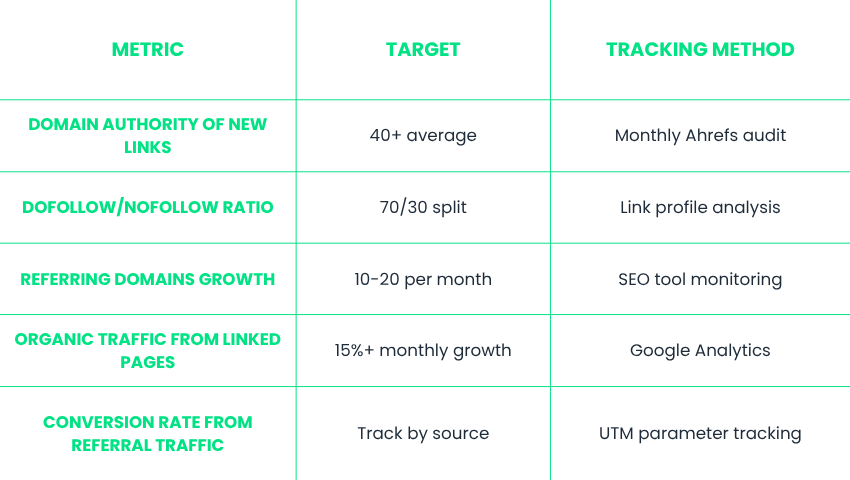
Tracking the right metrics separates successful link building campaigns from busy work. Focus on metrics that correlate with business outcomes, not just vanity numbers.
Core KPIs to track:
ROI calculation for link building efforts:
ROI = (Revenue from organic traffic growth - Link building costs) / Link building costsMost saas link building campaigns show positive ROI within 3-6 months, with compounding returns as links mature and search engine rankings improve.
Tools for tracking progress:
-
Ahrefs or SEMrush for backlink monitoring and domain rating tracking
-
Google Analytics for traffic and conversion attribution
-
Google Search Console for search visibility and click-through rates
-
CRM integration for lead source tracking and revenue attribution
Implementation Roadmap: Getting Started
Month 1: Foundation
-
Complete competitor backlink analysis
-
Audit existing backlink profile using SEO tools
-
Identify top 20 target websites for outreach
-
Create initial batch of linkable content assets
Months 2-3: Content Creation and Outreach
-
Launch first data study or industry report
-
Begin guest posting outreach to target publications
-
Start systematic broken link building in your niche
-
Initiate relationships with key industry journalists
Months 4-6: Scaling and Optimization
-
Analyze which tactics drive highest quality backlinks
-
Double down on most effective strategies
-
Begin partnership discussions with complementary tools
-
Measure and optimize conversion rates from referral traffic
When to consider a saas link building agency: If you’re acquiring fewer than 10 quality links per month after three months of consistent effort, or if link building is taking more than 20 hours per week of internal resources, it may be time to explore saas link building services. Many saas link building agencies specialize in the unique challenges of B2B software marketing and bring established relationships that can accelerate results.
White Hat Link Building Best Practices
Sustainable white hat link building for SaaS companies requires strict adherence to search engine guidelines and industry best practices. Shortcuts and manipulative tactics risk penalty and reputation damage in the trust-sensitive SaaS market.
Quality over quantity principles:
-
Prioritize relevant links from authoritative websites over high-volume, low-quality placements
-
Maintain natural anchor text diversity
-
Build links gradually to avoid suspicious link velocity patterns
-
Focus on editorial links that brings value
Content integrity standards:
-
Create genuinely useful resources that merit natural citations
-
Avoid thin content designed solely for link insertion
-
Ensure all guest posts provide real value to the host site’s audience
-
Be transparent about business relationships and avoid deceptive link practices
Relationship building approach:
-
Invest time in genuine relationships with industry influencers and journalists
-
Provide value before requesting favors
-
Maintain professional persistence without being pushy
-
Build long-term partnerships rather than transactional exchanges
The Reality Check: What to Expect
Let’s be honest about timelines and expectations. SaaS link building is a marathon, not a sprint. Quality backlinks take time to acquire, and search engines need additional time to recognize and credit these links in your rankings.
Realistic timeline expectations:
-
First quality links: 30-60 days after launching outreach
-
Measurable traffic impact: 90-120 days from first links
-
Significant ranking improvements: 6-12 months of consistent effort
-
ROI positive: 6-9 months for most SaaS companies
Budget considerations:
-
Internal effort: 15-25 hours per week for meaningful results
-
Tool costs: $200-500 monthly for essential SEO and outreach tools
-
Content creation: $1,000-5,000 monthly for high-quality linkable assets
-
Agency alternative: $1,000-10,000 monthly depending on scope and competition
The math is straightforward: consistent investment in strategic link building drives compounding returns through improved search visibility, increased organic traffic, and enhanced brand authority. SaaS companies that commit to systematic, white hat link building see average organic traffic growth of 40-60% year-over-year.
Conclusion: Building a Winning SaaS Link Building Strategy
If you follow these steps and consistently apply the proven saas link building strategies outlined in this guide, you’re setting your business up for long-term success. You’ll not only improve your search engine rankings and domain authority but also drive valuable organic traffic that converts.
Your link building strategy needs to evolve with algorithm updates, competitive changes, and shifting industry dynamics. The tactics that work today will need refinement tomorrow. But the fundamentals, creating value, building relationships, and earning trust, remain constant.
Start with competitor analysis, audit your existing assets, and choose 3-4 strategies that align with your resources and goals. Consistency beats perfection, and strategic patience beats aggressive shortcuts every time.