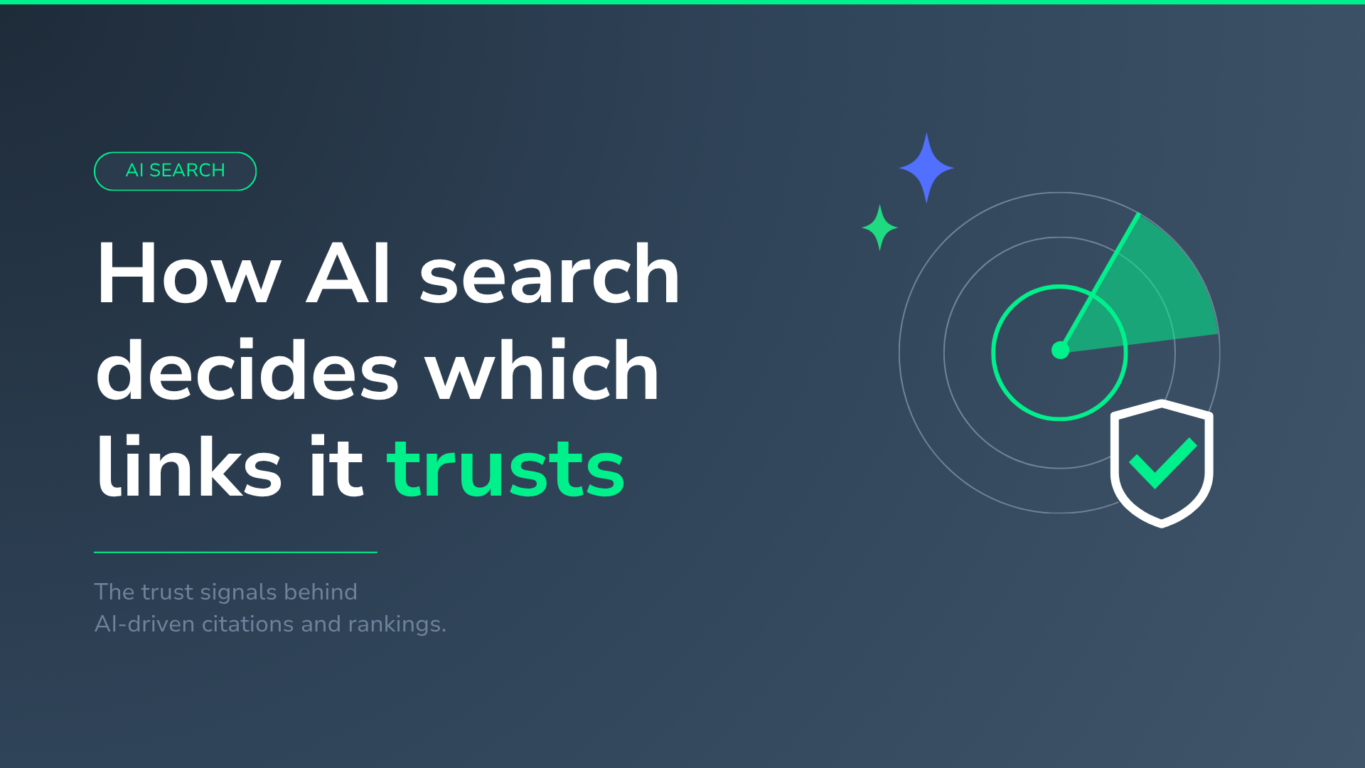
How AI Search Decides Which Links It Trusts
Jump to section [Open]
Every answer engine faces the same problem before it writes a single word. Out of millions of pages that could support a claim, it has to choose a handful worth quoting. That selection is not random, and it is not purely about who wrote the best sentence. It runs on trust signals that were built long before the query arrived, and most of those signals still trace back to links.
The instinct in 2026 is to declare the link dead. The data says something more precise. Links did not lose their job. They changed what the job is.
The threshold nobody tells you about
Traditional SEO treated backlinks as a scoreboard. More links, more authority, higher ranking. AI retrieval does not work that way. It works as a gate.
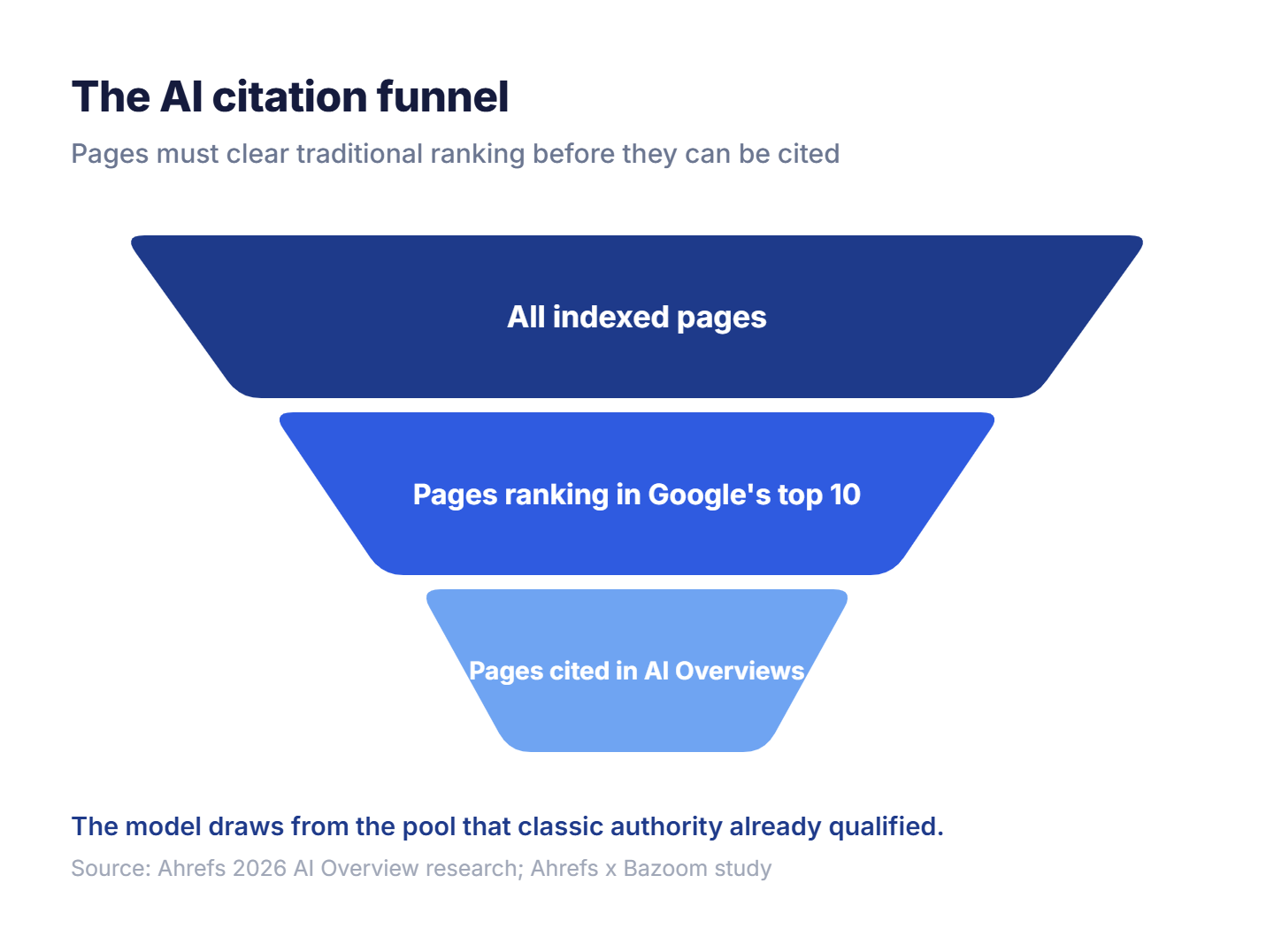
Before a page can be quoted in an AI answer, it usually has to already rank:
- Around 76% of AI Overview citations come from pages sitting in the traditional top 10.
- Roughly 88% of ChatGPT citations already rank in classic search.
- The AI does not go hunting in the basement of the SERP for a hidden gem. It draws from the pool that conventional authority already qualified.
That is the part most GEO advice skips. If your page cannot clear page one, it rarely enters the source set the model chooses from. Links are what get you into that room.
Our own Ahrefs x Bazoom analysis, built across roughly 3 million URLs comparing traditional SERPs, Google AI Mode, and ChatGPT citations, lands on the same structure from a different angle. Across all three systems, 75% of the top URLs carry a Domain Rating of 40 or higher. Domain authority is the entry ticket. It is not the whole game, but you do not get to play without it.
Where the model stops counting links and starts counting mentions
Here is where the story gets interesting, and where a lot of link budgets are quietly misallocated.
Once a domain clears the authority threshold, the signal that best predicts a citation is no longer the raw backlink. It is the mention. Ahrefs studied 75,000 brands and ranked the signals that correlate with AI Overview visibility:
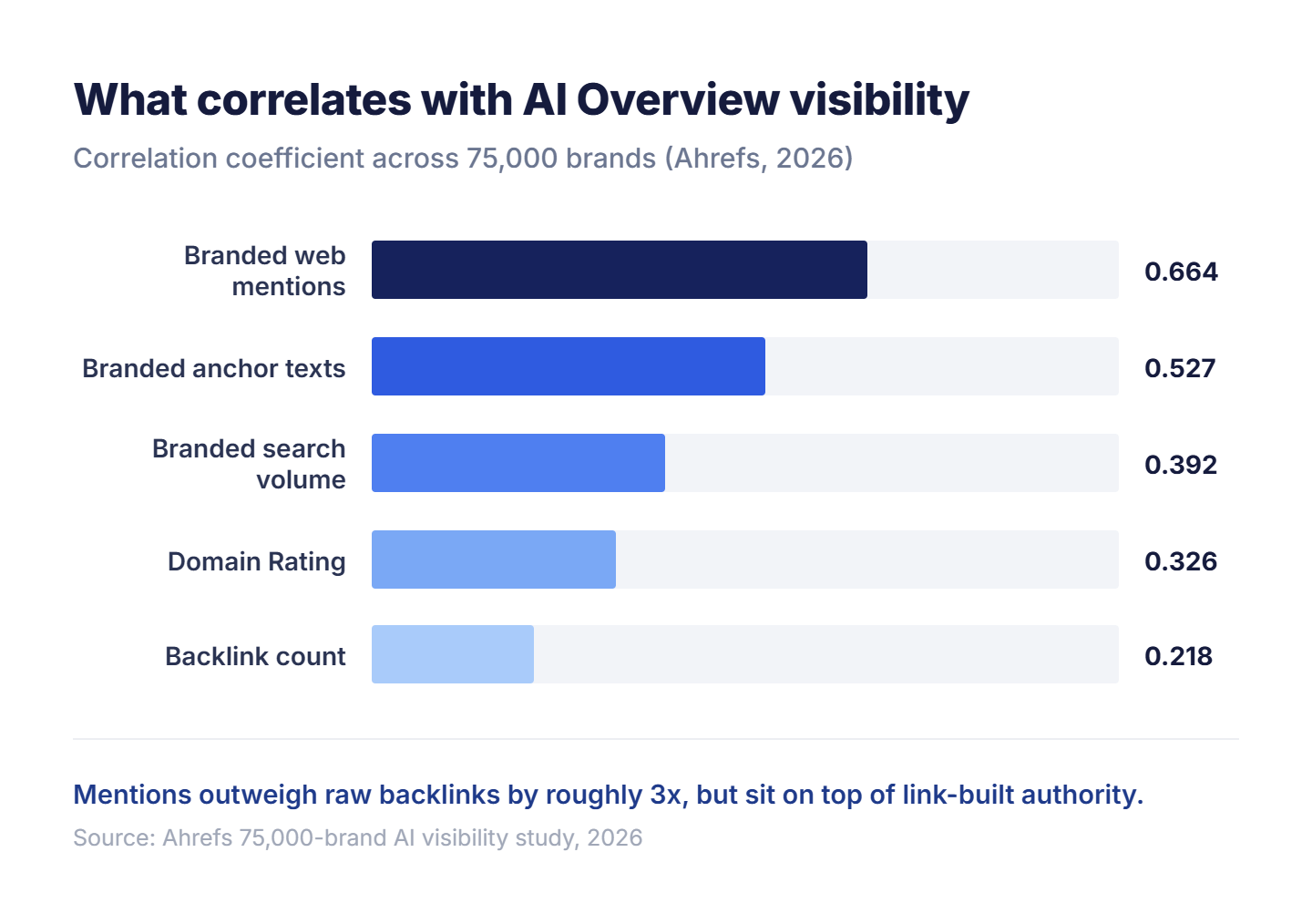
Read that carefully before you cancel your link campaigns. The mention wins on correlation, but the mention rarely exists without the link ecosystem underneath it:
- Backlinks build the rankings that make a domain eligible in the first place.
- Mentions decide which eligible domain gets pulled into the answer.
- They are two links in one chain, not two competing strategies.
There is a second detail worth holding onto. Semrush found that nofollow links correlate with AI visibility almost as strongly as follow links. AI systems are reading and referencing content, not passing PageRank through a link graph. For AI search specifically, a relevant unlinked citation on a trusted publication can carry weight that a classic SEO audit would have thrown away.
Diversity beats volume, and the data is blunt about it
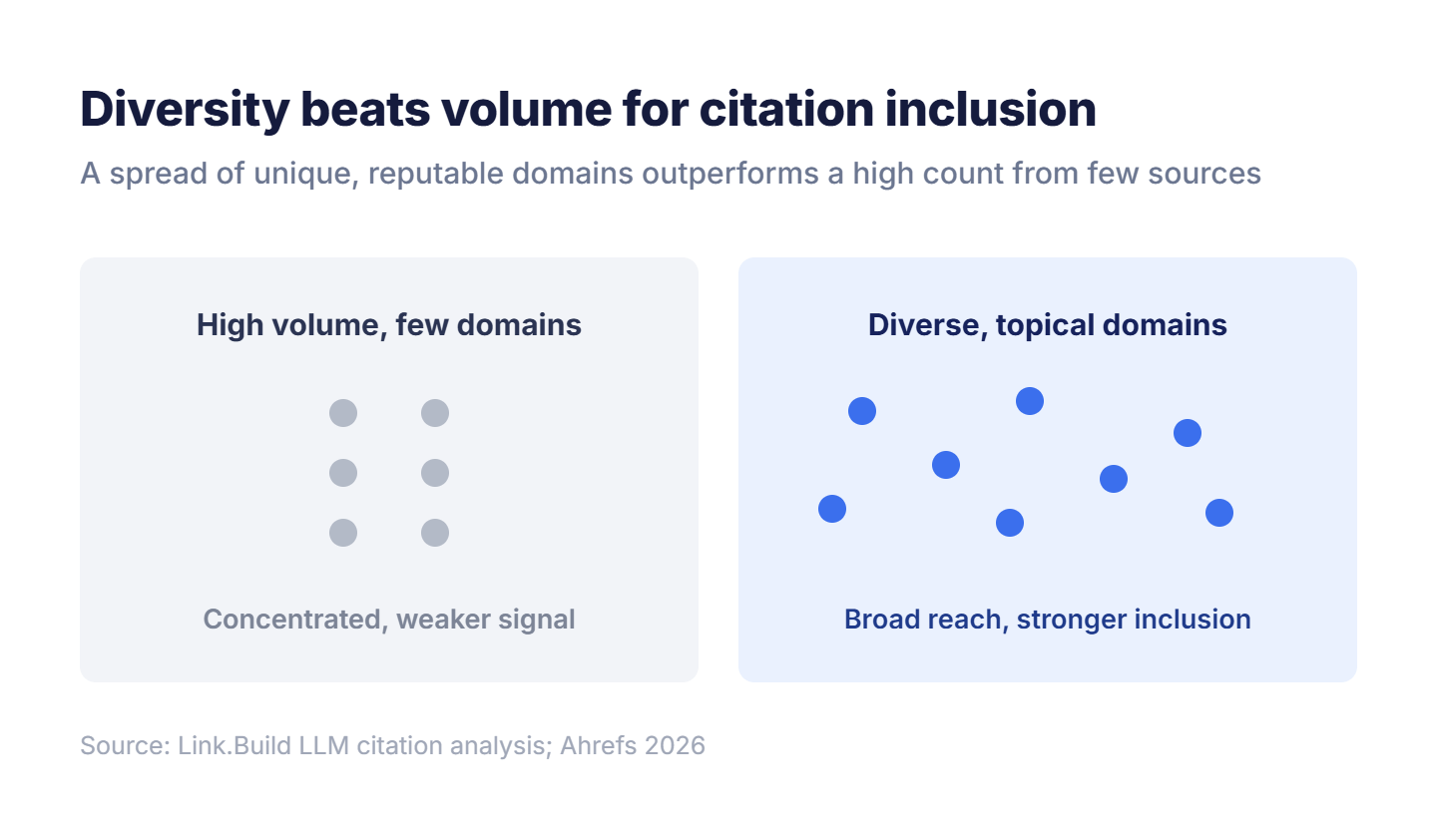
If AI search rewards presence across trusted sources rather than a pile of links from a few domains, then the shape of your link profile matters more than its size.
Link.Build’s analysis of U.S. queries found three patterns that map cleanly onto how insertions and earned coverage should be planned:
- Quality and topicality beat raw volume. Links from context-relevant publications predict citations better than sheer counts.
- Diversity matters. A broader set of unique, reputable referring domains is tied to higher inclusion.
- Recency helps. Fresh coverage correlates with short-term citation gains during active research cycles.
Freshness is not a soft factor either. AI-cited content averages about 1,064 days old against 1,432 days for the organic Google top 10, roughly 26% fresher. Pages updated within 30 days have been found to earn several times more citations. A well-placed link insertion into a page you actively maintain compounds in a way a forgotten guest post never will.
What this means for link insertions and onsite content
Pull the threads together and a practical model appears. Think of it as three moves, in order:
- Domain authority is the entry ticket. You still need enough link-driven authority to rank, because ranking is what makes a page eligible to be cited at all. Skip this floor and the rest never gets read.
- Diverse, topical placements are the multiplier. A spread of contextually relevant insertions across unique, reputable domains reinforces rankings and seeds the branded mentions AI systems weight most heavily.
- Fresh onsite content closes the loop. Links point to pages. If those pages are current, well-structured, and make specific, attributable claims, they convert authority into citations. If they are stale, the authority leaks.
The brands winning AI visibility are not the ones with the most links or the loudest GEO tactics. They are the ones treating authority as a system: earned placement to get in the door, diversity to get noticed, and living content to get quoted.
Links still decide which sources AI search trusts. They just decide it as part of a bigger chain now, and the teams that understand the whole chain are the ones getting cited.