How We Built 40 High-DR Links for a SaaS Client in 90 Days (Without Guest Post Spam)

Jump to section [Open]
Industry: B2B SaaS | Timeline: 90 days | Links built: 40 | Average DR: 68
Everyone in link building has a “we did X in Y days” story. Most of them skip the part where things didn’t work.
This one doesn’t.
Here’s exactly how we built 40 high-DR backlinks for a SaaS client in the competitive project management space — including the publishers we rejected, the anchor strategy we iterated on mid-campaign, and what the traffic looked like three months later.
The Brief
The client came to us with a solid product, decent on-page SEO, and a backlink profile that was politely described as “thin.” Around 60 referring domains, mostly directory listings and a few press releases from their launch.
They were ranking on page two for their core terms — not because of poor content, but because they were being outgunned on authority by competitors with 3–4x the referring domain count.
The goal: Close that gap meaningfully, without shortcuts that would create a cleanup problem six months later.
The constraints: No guest posts on sites that exist purely for guest posts. No link farms. No PBNs. Real publications, real editorial standards, real traffic.
Step 1: Publisher Selection — Where Most Budgets Get Wasted
We started by filtering Bazoom’s marketplace of 100,000+ publishers down to a qualified shortlist. Having that scale to work from matters — it means you’re selecting, not settling. But volume alone doesn’t help if you’re not cutting aggressively.
Our rejection criteria:
- DR 70+ but fewer than 500 organic sessions/month → rejected (inflated metrics, no real audience)
- Accepting any topic with no editorial review → rejected
- “Write for us” pages indexed on Google → rejected (too saturated, links carry less weight)
- Site-wide footer links as standard practice → rejected
After filtering, we had 61 qualified publishers across three tiers.
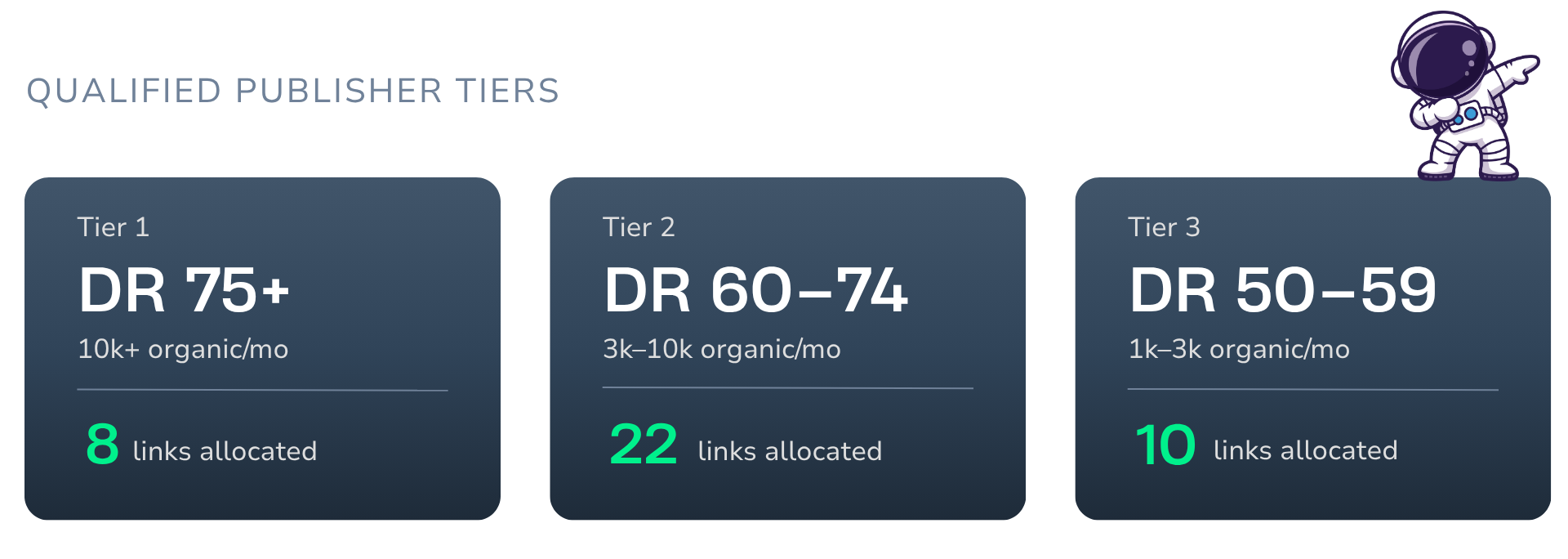
We intentionally allocated fewer Tier 1 spots. High-DR publishers in real editorial spaces take longer, require better content pitches, and occasionally fall through. Building the campaign around them is a recipe for missing deadlines.
Step 2: Anchor Text Strategy — The Part Everyone Gets Wrong
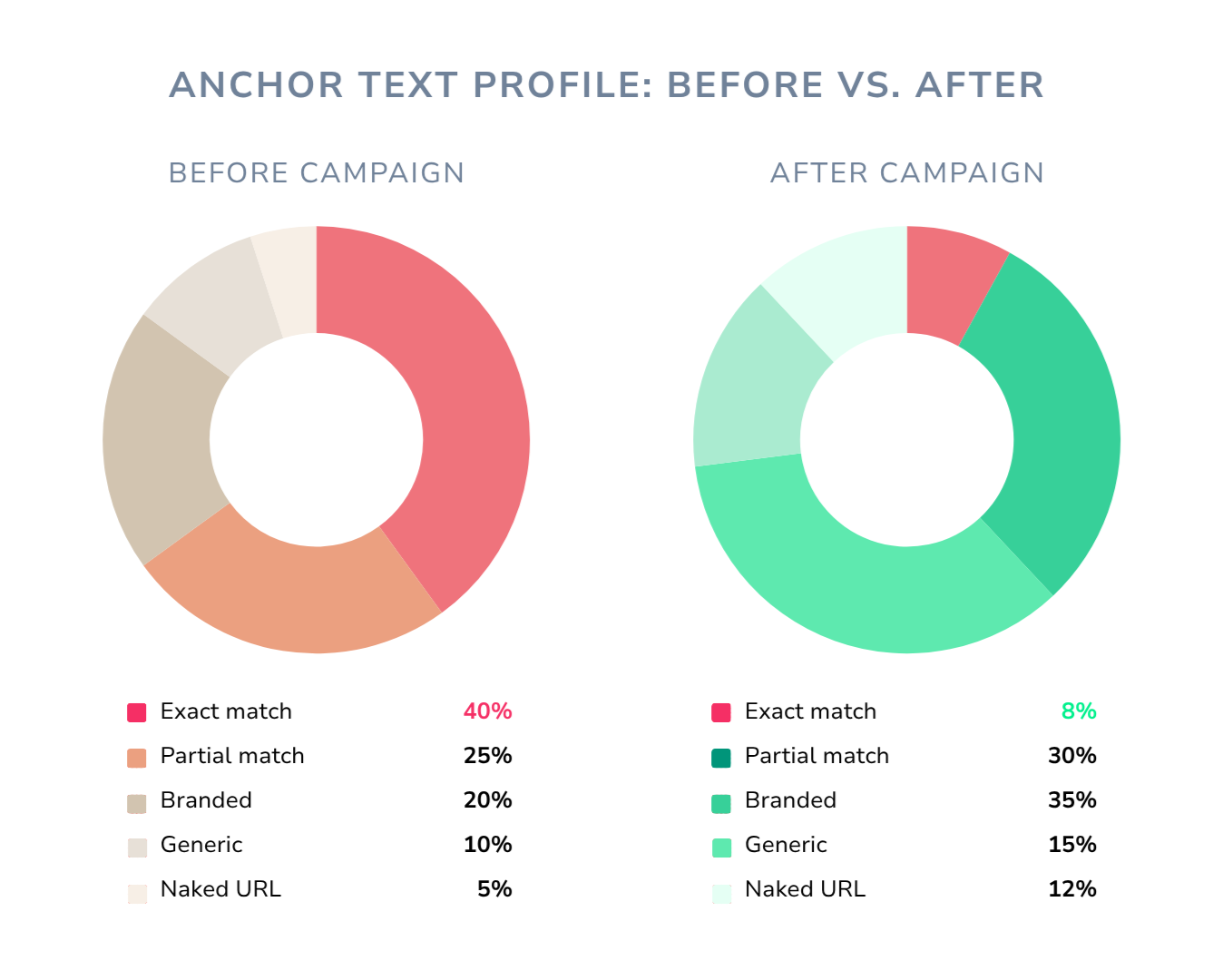
The client’s existing anchor profile was over-optimised. Around 40% exact match on their primary keyword. Not enough to trigger a penalty, but enough to look unnatural at scale.
Before selecting a single publisher, we ran an anchor audit against three direct competitors and mapped out what a healthy distribution looked like in their niche.
Our target distribution for the 40 new links:
- Branded anchors (company name, domain): 35%
- Partial match / topical: 30%
- Generic (learn more, this resource, click here): 15%
- Naked URL: 12%
- Exact match: 8%
The exact match percentage was deliberately lower than what we’d normally recommend for a fresh profile, because we were correcting an existing imbalance — not building from zero.
We also made a call mid-campaign: three placements were coming back from publishers with anchor suggestions that skewed too exact-match. We negotiated two of them to partial match. The third we walked away from.
That’s what anchor discipline actually looks like in practice.
Step 3: Content That Publishers Actually Want
We produced 28 unique pieces of content for the 40 placements. (Some publishers accepted data-led assets that could be adapted across two related pieces on different sites — ethically done, different angles, different anchor focus.)
The table below shows how content formats mapped to publisher tiers and what that meant for acceptance rates:
| Content format | Best tier fit | Acceptance rate | Avg. turnaround |
| Original data / research | Tier 1 | ~95% | 3–4 weeks |
| Contrarian / opinion piece | Tier 2 | ~80% | 1–2 weeks |
| Practical how-to (deep) | Tier 2–3 | ~75% | 1 week |
| Product-adjacent tutorial | Tier 3 | ~65% | 1 week |
What we didn’t produce: fluffy 600-word posts with a link jammed into paragraph three. Publishers have seen that play too many times. Editors notice. Links from those pieces perform worse too.
Step 4: Publisher Selection from the Marketplace — The Unglamorous Part
40 live links across 90 days means roughly one secured placement every 2.25 days. That sounds manageable until you account for the ones that stall or fall through after initial approval.
Rather than running cold outreach, we worked directly from Bazoom’s publisher marketplace — filtering by niche relevance, DR range, traffic, and editorial standards for each placement. This cuts a significant chunk of the usual back-and-forth: publishers in the marketplace have already agreed to accept placements, so the conversation starts at content requirements, not “who are you and why should I care.”
The actual pipeline:

- 61 publishers selected from the marketplace
- 54 briefs initiated after final client sign-off on the shortlist
- 38 moved to active content production
- 31 content submissions accepted on first pass
- 40 links live (several publishers ran two pieces from the same client)
The drop between briefs and submissions usually comes down to one thing: editorial requirements that surface once you’re inside the process. We documented every publisher’s actual requirements (not just what their listing says) in a shared tracker. This saved us from multiple late-stage surprises.
The Results — 90 Days Out
Traffic data is from the client’s GA4, measured against the 90-day baseline period before the campaign started.
| Metric | Before | After (90 days) |
| Referring domains | 63 | 98 (+55%) |
| Ahrefs DR | 41 | 49 |
| Organic sessions | baseline | +34% |
| Page 1 keywords | 0 of 6 targets | 6 of 6 targets |
Three keywords hit position 4–6, where they’re sitting now and continuing to move. The link building campaign alone doesn’t explain everything — the client was also publishing consistently and had fixed some technical issues during the same period. We’re not going to pretend otherwise.
But the referring domain growth correlated directly with ranking movement in a way that wasn’t random. The Tier 1 placements drove the most measurable impact, despite being the smallest portion of the campaign.
What We’d Do Differently
The anchor correction strategy was the right call, but it slowed early momentum. If we were running this again with the same client profile, we’d flag the over-optimisation issue before scoping the campaign and build the correction time into the brief — not discover it at kickoff.
We’d also front-load the Tier 1 publisher selection. Waiting until week three to lock in those placements cost us two spots that went to other campaigns.
The Takeaway
High-DR link building without guest post spam isn’t a mystery. It’s a combination of strict publisher filtering, anchor discipline, content that’s actually useful to the reader, and realistic pipeline management.
The 90-day timeline is achievable. The 40 links are real. The results are the results.
If you want to see how this kind of campaign would look for your niche, talk to our strategy team.