Why a competitor backlink analysis matters for SEO success
Jump to section [Open]
Why does SEO planning feel like guesswork when you only look at your own site? The answer is simple; you are missing half the picture. Your competitors’ backlinks show you how authority is really built in your space and which signals search engines already trust.
Seeing how competitors earn authority links helps you plan SEO with evidence rather than assumptions, giving structure to link building decisions that would otherwise rely on trial and error.
When you look at competitor link profiles, you will notice gaps that are hard to spot otherwise. You see where rivals earn links, which types of content attract attention, and which publishers repeatedly appear across top-ranking pages. That insight makes it easier to focus effort where it actually matters rather than chasing links at random.
At Bazoom, we help you cut through the noise by focusing on quality backlinks that strengthen your domain over time. Not every link moves the needle, and knowing the difference changes how you plan SEO, allowing you to identify valuable link building opportunities.
Discover hidden link opportunities through competitor reviews
Reviewing competitor backlinks is not about copying what others are doing. It is about understanding where links are realistically coming from in your space and why certain sites keep appearing across top-ranking pages. This is how you gain competitors’ backlink insights that actually translate into action rather than guesswork.
By viewing rivals’ link sources side by side, patterns begin to show. You may notice recurring publisher-specific content formats that attract links or partnerships competitors lean on to build authority. These signals often reveal opportunities you would never uncover by analyzing your own site alone.
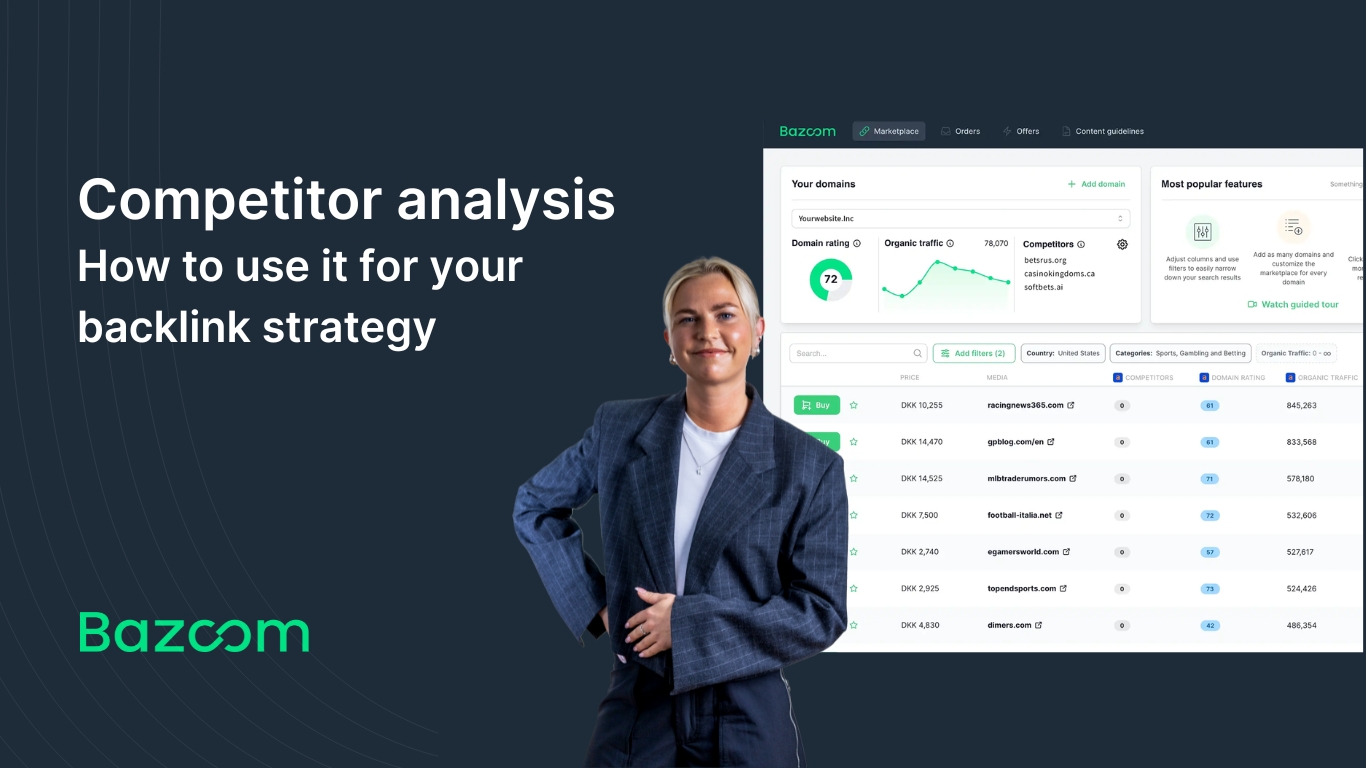
Bazoom makes this process more practical by bringing competitor backlink data into one clear view. Instead of switching between tools, you can review referring domains, placement context, and link quality in a way that supports strategic backlink research, not surface-level metrics.
To identify the most valuable opportunities, focus on relevance and repetition. Look for sites that link to multiple competitors but not to you yet. Review what they link to, why it works, and where your content can add more value. That approach helps you target link sources that matter rather than chasing volume for its own sake.
The top tools for analyzing competitor backlinks
Choosing the right tool for competitor backlink analysis depends on how deep you want to go and how you plan to use the data. Most teams start with established backlink checker platforms that support competitor link tracking at scale.
Commonly used tools include:
- Ahrefs for large backlink indexes, fast competitor comparisons, and detailed referring domain data
- SEMrush for combining backlink insights with keyword visibility and traffic context
- Moz for simpler authority metrics and a lighter approach to competitor research
Bazoom fits into this landscape by making competitor analytics tools easier to act on. Instead of stopping at raw link data, we help you turn findings into clear next steps by focusing on link quality, relevance, and missed opportunities. This approach supports thorough backlink audits without burying insight in reports.
The right platform should match how you work. Look for depth if you need filtering and comparison. Choose clarity if your goal is faster, better decisions.
Use a backlink checker and SEO tools to check backlinks across competitors’ domains and uncover backlink opportunities with fresh data from a useful tool.
Learn to master backlink analysis tools for greater SEO impact
Backlink data only becomes useful when you approach it with intent. Getting value from competitor backlink tools is about deciding what matters before you look at the numbers. Start by filtering out irrelevant or low-impact links so your focus stays on backlinks that influence visibility, trust, and ranking.
Comparing domains side by side adds depth to that view. This competitor link evaluating process shows where your link profile falls short and where rivals are gaining ground. When the same publishers and content formats keep appearing, it becomes easier to understand how authority is being built and which approaches are starting to lose effectiveness.
Bazoom brings structure to this work by organizing advanced backlink analytics into a clear, working view. Instead of juggling exports and disconnected dashboards, you can track changes across competing domains, tag meaningful findings, and keep analysis tied to real decisions rather than static reports.
Understanding how to monitor competitor backlinks effectively comes down to consistency. Regular reviews expose shifts in strategy as they happen. Watching backlinks develop over time allows you to respond earlier, adjust faster, and plan your next moves with greater confidence.
“A competitor backlink review is not about copying links. You are using backlink data and referring domains to understand link quality, anchor text, and how dofollow backlinks and nofollow links shape an overall backlink profile. That is how teams spot spammy links early and improve domain authority without damaging their own backlink profile.”
– Tamara Novitović, Head of SEO at Bazoom Group
You should focus on quality backlinks from authoritative sites to strengthen domain authority and page authority without relying on high-risk link building tactics.
Create standout content to win competitor-based links
Winning links from sites that already link to your competitors starts with content quality. Publishers link out because something was useful, clear, or genuinely better than what already existed. If a site has linked once, it can link again as a dofollow backlink, provided you give them a stronger reason.
Start by reviewing the competitor pages that attract the most links. Look beyond the topic headline and study what those pages actually deliver. This is where content gaps surface. Sometimes the information is outdated. Other times it lacks depth, clarity, or follow-through, leading to a lack of valuable links. Those gaps are where you can surpass rival link sources without chasing random placements.
Bazoom helps you simplify this process by comparing competitor content side by side. You can see which pages earn coverage, what formats work best, and where value drops off. From there, focus on building resources that improve on what already exists:
- Expand narrow articles into comprehensive pieces that answer related questions
- Add original insights, data, or examples that competitors do not include
- Update pages that rely on old references or incomplete information
- Improve structure and readability so content is easier to reference and cite
This approach makes it easier to earn competitor’s link coverage because the value is clear before outreach even begins. When your content becomes the better reference, publishers have a practical reason to update their links.
Understanding how to attract competitor-based backlinks and apply effective link building tactics comes down to relevance and link text usefulness, not chasing volume for its own sake.
Build content publishers want to reference and start converting competitor links into opportunities you control. Do you want help with this? Then reach out to us to learn how we can help you.
Successful outreach: How to contact sites linking to competitors
Successful outreach starts with knowing who already links in your space and why. When you analyze competitor backlinks through Bazoom, you are not just building a prospect list. You are seeing which publishers are willing to reference similar content and what kind of value they respond to. That context matters more than any email template.
Before reaching out, study how competitor links are used on the page. Are they supporting data, recommending a resource, or adding background to a point being made with external backlinks? These details guide effective approaches for getting competitors’ inbound links and help you decide whether your content meaningfully improves on what is already there.
Once you understand that context, outreach becomes far more focused. Instead of sending broad requests, you are contacting sites with a clear reason and a specific improvement. Discovering external linking domains is only useful when you also understand the role each link plays and whether it makes sense to suggest an alternative.
Bazoom supports this outreach process by keeping prospects, contact notes, and responses organized in one place, so opportunities do not get lost once conversations begin.
When it is time to reach out, keep the message grounded and specific:
- Identify the editor or content owner responsible for the page
- Reference the exact competitor link you are addressing
- Explain what your content adds, updates, or clarifies
- Support the pitch with concrete examples rather than general claims
This is how teams outrank with tailored outreach instead of relying on volume. Over time, consistent and well-informed contact builds trust, leading to repeat links and stronger authority rather than one-off placements.
How to use broken link building to your advantage
Broken link building works because it fixes a real issue. When a page links to a resource that no longer exists, it creates a poor experience for readers and weakens the content. Finding broken backlinks pointing to competitor pages gives you a natural reason to reach out.
With Bazoom, you can identify where competitor links have stopped working and see which pages are affected. This makes it easier to fill competitor’s broken link gaps with relevant content that restores value rather than forcing a link request. The aim is to match intent and improve the page to earn new backlinks, not just replace a URL.
Outreach should stay polite and direct:
- Point out the broken link and where it appears
- Explain briefly why it no longer works
- Offer your content as a relevant replacement
This easy broken link approach benefits both sides. Publishers can rescue dead links with fresh content, and you earn links by being useful, not pushy.
Staying ahead: Monitoring new competitor backlinks
Competitor backlink analysis should never be a one-time task. Link profiles change constantly. Without regular monitoring, it is easy to miss the moments that actually matter, especially when significant backlink growth is happening. Bazoom brings this into an ongoing workflow so link movement is visible while it is still useful, not after it has already played out.

The strongest setups combine alerts with scheduled reviews. Instant competitor link updates show you when something new happens, while routine check-ins help you watch competitor link patterns develop over time. This makes timely rival link growth easier to spot, particularly when it appears around a specific page, publisher, or content theme.
Noticing those changes early creates options. A new link source may signal a topic editors are actively covering or a format that is performing well. That insight can guide updates to existing pages and new content creation as a ranking factor, or targeted outreach before the opportunity cools down.
Consistent monitoring removes guesswork. Instead of reacting late, you are working with current signals and making decisions while link opportunities are still open.
“Competitor backlinks are never static. You need SEO tools that let you check backlinks, track new backlinks, and spot lost backlinks at the page level on a competitor’s site. Over time, that visibility turns link building efforts into a measurable ranking factor rather than guesswork.”
— Nikolaj Østergaard, Co-Founder at Bazoom Group
You should find competitor backlinks early, track new backlinks as they appear, and recover lost backlinks by turning competitor link data into ongoing link building opportunities.
Tips to maintain a healthy and diverse backlink profile
A strong backlink profile depends as much on restraint as it does on growth, considering the risks associated with selling links. Looking at competitor link profiles often highlights the risks first. Spam-heavy directories, irrelevant placements, and repeated low-quality sources tend to surface around the same publishers. Spotting these patterns early makes it easier to avoid similar exposure in your own strategy.
Safeguarding link diversity starts with balance. A resilient profile draws authority from different domains, content types, and contexts rather than relying on a narrow set of sources. Improving backlink stability means favoring relevance and consistency over aggressive volume once anchor text and placement types begin to repeat.
This is where Bazoom provides focus. By surfacing link-source patterns, context signals, and frequency issues across domains, our platform gives you a clearer view of which links strengthen authority and which introduce unnecessary risk. That visibility allows you to adjust before weak signals accumulate.
Cleanup should always be deliberate. Reviewing outdated placements, reassessing relevance, and using disavow tools sparingly keeps your profile credible without interrupting natural growth. The aim is not constant removal, but removing damaging inbound links when they undermine trust.
Keep your backlink profile stable as you scale, and avoid the pitfalls that come with trying to buy backlinks. Reach out to us if you want us to help you identify risk early, protect link diversity, and preserve domain strength as your link building efforts grow.