What is ecommerce link building and why does it matter?
Jump to section [Open]
Ecommerce link building is the process of attracting high-quality backlinks to your online store. These links help search engines understand the value of your site, improve your ranking, and drive consistent organic traffic. For ecommerce brands, every click counts, and trustworthy backlinks enhance not only visibility but also credibility.
Competition is high, so having a strong link profile may make or break whether you’re discovered or lost. Trustworthy links to your site will make you appear more authoritative, and customers will have more confidence in purchasing from you.

Would you like an easier way to create these links? Then explore link opportunities with Bazoom.
Common challenges in ecommerce link building
Link building is necessary, yet ecommerce teams face numerous challenges. First, competition is intense: thousands of online stores offer similar products, making it difficult to stand out. There is also a limit on link-worthy product-based content.
Most retailers use descriptions and category pages, which are not inherently link-worthy. Authoritative backlinks from reputable websites are even more challenging to obtain when the market is saturated.
Budget and time constraints can be problematic for small ecommerce websites and shops when implementing link building. This is because a link building webshop strategy can be highly knowledge-intensive.
It can also affect the site’s SEO and often requires external talent. Larger brands, on the other hand, must scale link building strategies across hundreds of categories.
At this point, planned tactical assistance would be helpful. Bazoom can resolve these challenges. We enable both large and small ecommerce brands to access curated resource pages, resource links, and publisher networks.
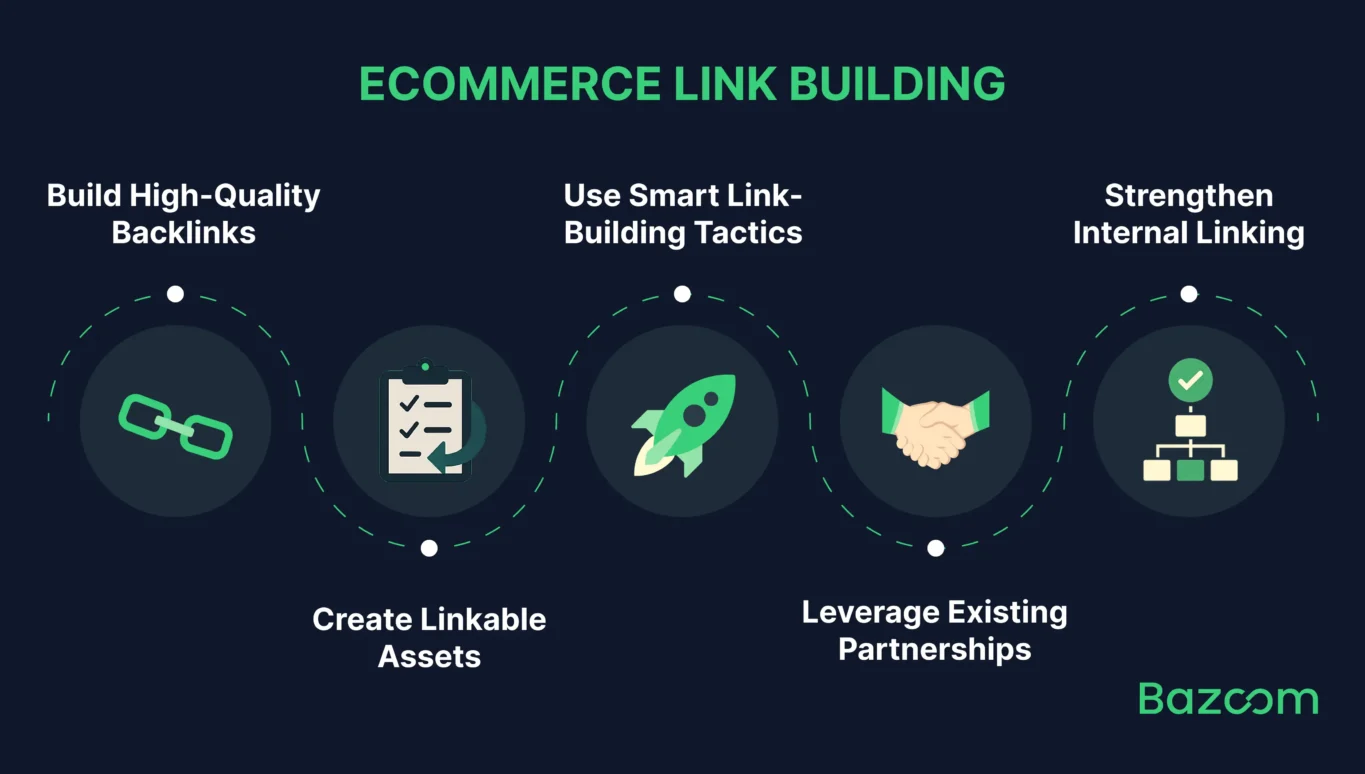
How to create linkable assets that attract backlinks
To create linkable assets that attract backlinks, you need content people want to share. This means paying attention to helpful blog posts and informative or entertaining materials that can address the issues your readers face.
The following is a step-by-step overview of the types of assets to target for organic links. This can be used as part of an effective link building strategy.
Ready to scale your efforts and attract more traffic? Bazoom can help you plan your content and maximize outreach.
Develop high-quality content
One of the best tactics for building inbound links on an ecommerce link building website is to publish great content. Produce blog posts, buyer guides, or how-tos that respond to actual customer inquiries and improve search engine rankings.
Differentiate your content with original insights, expert commentary, or a distinctive angle. Both meaningful and deep content are signs of authority and encourage natural referencing.
When investing in link building strategies for ecommerce, target evergreen resources that would be beneficial in the long term. The better your content is, the more the other sites will have links to you in the search engine results.
Utilize visual content
Visuals make your content stand out, engaging, and shareable. Infographics, mini videos, data charts, and product comparison graphics are all great for ecommerce link building.
People value images they can reference quickly, particularly those that are unique or make complex ideas easy to understand.
Distribute these resources via social media, newsletters, and partner communities to raise awareness. A link building strategy for your ecommerce shop, built around high-quality visuals, attracts relevant links and helps create a natural backlink profile.
Publish original research
Original content is highly linkable; you can run surveys, conduct industry research, or examine customer trends in your industry. Display your results using easy-to-follow graphs, charts, or complete reports.
Research-based content resonates with many ecommerce link building strategies. Why? Because bloggers and journalists often cite credible data. This approach also enhances your ecommerce website’s performance. This is because backlinks are expected when your research is trusted.
Having trouble promoting your study? Bazoom can connect you with publishers who value data-driven content.
Boost your rankings with guest posting and collaborations
One of the most effective ecommerce link building strategies is guest posting. You can provide niche content to earn quality links from authoritative websites. This strengthens your authority online.
Begin by pitching ideas to blogs within your industry. Give helpful information, simple tips, or fresh perspectives that will appeal to their audience.
Partnerships are also good. Collaborate with influencers to create link building opportunities through product reviews, sponsored content, or content swaps. You could also co-create ebooks, webinars, checklists, or promotional campaigns with complementary brands.
Moreover, partnerships are essential to scale guest blogging and promote ecommerce. Every partnership brings new followers, increased credibility, and greater power to your ecommerce site.
Bazoom will help you connect with industry-relevant publications, providing you with meaningful opportunities that never miss the mark.
Drive links with digital PR and outreach
Digital PR for online stores can help you gain high-authority backlinks from media outlets, blogs, and industry journalists. Imaginative campaigns, prompt insights, and compelling brand stories can capture journalists’ attention, boosting your visibility on search engine results pages.

Launch PR campaigns
Generate hype around product introductions, company anniversary events, or videos that are worth going viral. PR campaigns are effective when grounded in existing trends or newsworthy events.
These activities drive ecommerce PR link building and generate more traffic. This will increase your visibility in Google search results and enable your brand to reach a wider audience.
Media outreach
The fastest way to get press coverage is direct pitching. Create a list of journalists, bloggers, and editors in your niche. Write short, persuasive pitches that provide tangible value – data, expert opinion, or unique commentary. Media outreach can generate high-quality backlinks and, when appropriately executed, build credibility in Google search results.
Utilize HARO
Responding to HARO (Help A Reporter Out) questions is a smart way to earn expert mentions and authoritative links. Provide your expertise to journalists who need quotes, and you could find your way onto high-authority domain sites.
For example, this is effective for HARO links for ecommerce, digital PR for online stores, and expert positioning.
Want to organize outreach and identify PR opportunities? Bazoom can help you create an imaginative and successful PR campaign.
Unlock value from existing relationships
One of your best link building properties is your network. For instance, supplier links, ecommerce, manufacturers, partners, and distributors tend to be on high-authority sites. This contributes to link equity, and many of them are happy to provide external links to reputable retailers.
Begin by requesting placement in partner directories, testimonials, or co-branded case studies. These websites provide reliable backlink outreach value, which will help ecommerce websites. You can also track brand mentions across the web and request a link when your name appears without one.
Broken links offer an alternative opportunity. If you discover dead or outdated links in your industry, use broken link building to promote your new and current content as an ecommerce strategy. This tactic helps both sides; you earn a backlink, and they improve their page quality.
“Track these opportunities using Bazoom. We will assist you in identifying chances of relationships based on links and in handling outreach under a single dashboard.”
– Nikolaj Østergaard, Co-Founder at Bazoom Group
Mastering internal linking for better SEO
Internal links determine how users and search engines navigate your site. A strong structure helps search engines understand your hierarchy and improves the visibility of key pages. Begin by linking product pages and brand landing pages to category hubs in a logical flow. This is critical for the success of internal linking in ecommerce.
Use descriptive anchor text that clearly explains each page’s content. This enhances the user experience and SEO for the ecommerce website. Create special landing pages of leading brands or the most popular products to make them core assets.
Another way to improve SEO on ecommerce websites is to display related products, suggested products, and featured collections throughout your store. These links keep shoppers on your site longer and help establish your site’s authority, making it more appealing to other websites.
Want to boost your rankings? Then follow Bazoom’s best practices and methods for ecommerce internal links.