Tiered link building: The multi-layer link building concept
Jump to section [Open]
How do you strengthen your most important backlinks and improve search engine rankings without constantly adding new ones through building tiered links? Tiered link building involves creating multiple layers that add structure to your link building strategies through a clear, multi-layer approach.
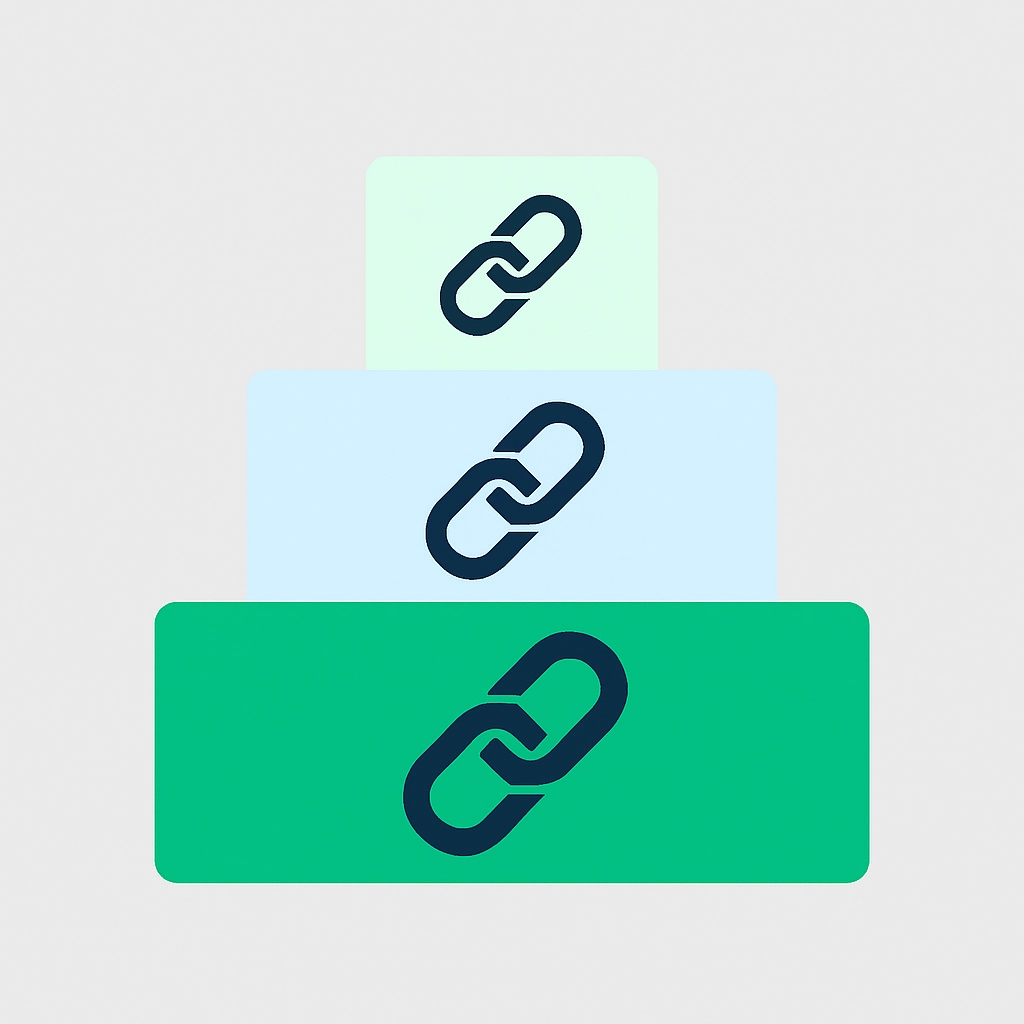
Tiered link building groups backlinks into levels, keeping lower quality sites away from first tier links that point straight to your target pages. Tier 1 links carry the most authority. Tier 2 and Tier 3 links support those primary placements. Their role is to strengthen existing links, improve discovery, and reinforce relevance.
This setup pushes link equity upward in a controlled way that search engines follow. Each tier has a clear purpose, which makes campaign performance easier to track and adjust. With structure in place, tiered link building supports growth without putting unnecessary pressure on your highest-value pages.
The purpose and goals of tier-based linking
Tier-based linking exists to strengthen your most important pages without overloading them with direct links. By spreading support across multiple layers, you improve search visibility while keeping authority growth controlled and scalable.
Bazoom makes this structure measurable from the start. Our analytical and campaign tools help you plan each tier, monitor performance at every level, and see how signals pass through your backlink profile as campaigns develop.
A layered backlinks system improves link equity distribution by reinforcing strong placements instead of concentrating risk on a handful of direct links. This multi-level link building approach also guards against penalties, since lower tiers do not point straight to your site, and growth remains natural. The result is steadier indexation, reduced risk, and campaigns that can scale with confidence rather than guesswork.
“A tiered link building strategy works best when link building strategies are planned as part of a wider SEO strategy. When teams prioritize quality and use Bazoom to manage structure across multiple tiers, they can build high quality links without relying on shortcuts.”
–Tamara Novitović, Head of SEO at Bazoom Group
The roles and hierarchy of the tiers
A tiered link building hierarchy works because each level plays a defined role in improving search rankings as part of a wider SEO strategy. Bazoom’s backlink reports help you see how this tier-level link structure performs in practice by showing how links interact across multiple tiers.
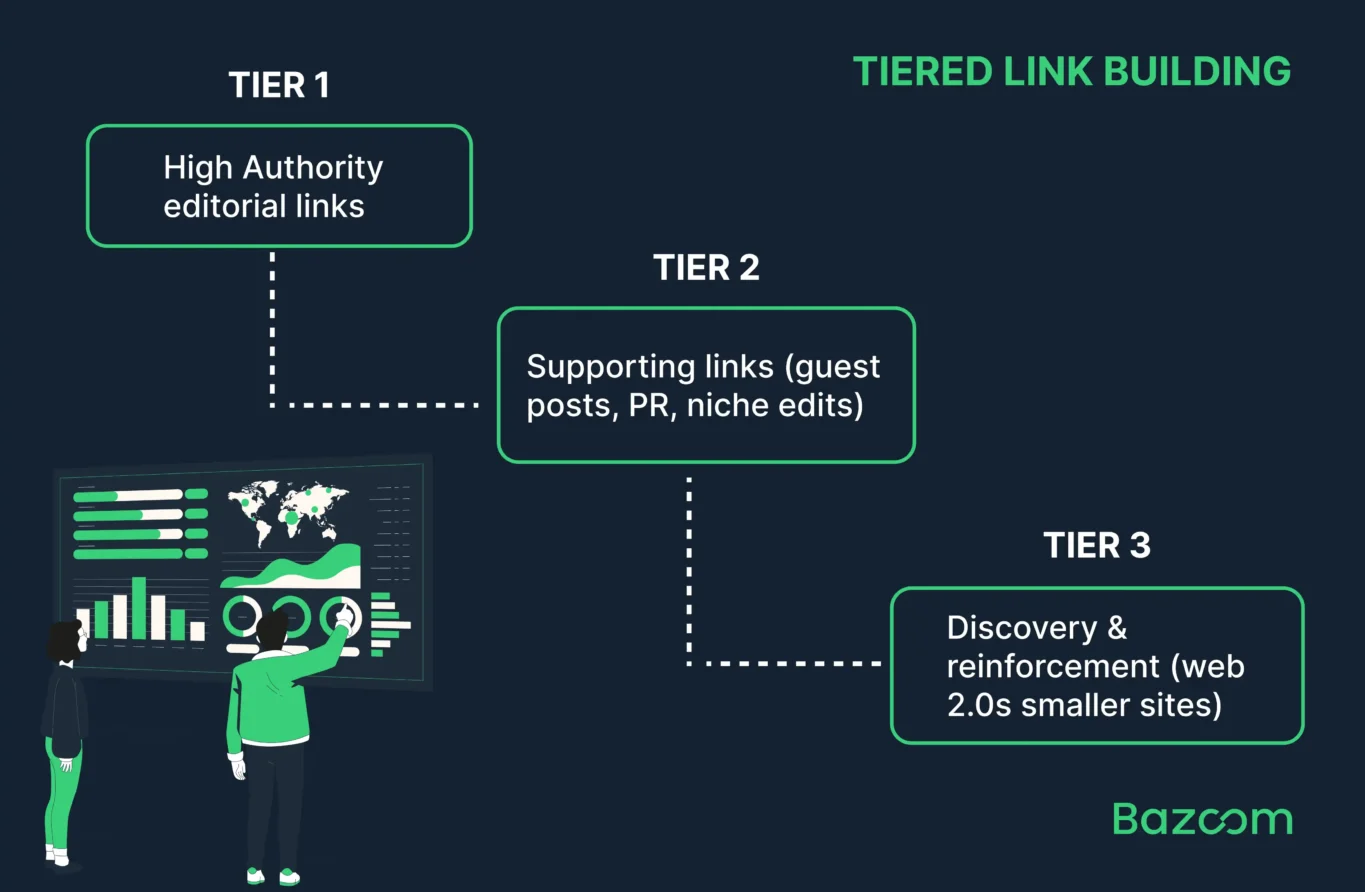
Tier 1 links sit at the top and point directly to your target site. These first tier links come from authoritative sites and high authority websites, appear within editorial content, and act as primary backlinks that carry the strongest signals. They must remain clean and supported by high quality links.
Tier 2 links support those placements by pointing to second tier backlinks rather than your own website. These links, often built through guest posts or digital PR, help pass link juice, reinforce relevance, and help search engines follow the structure.
Tier 3 links sit below and focus on discovery and reinforcement, helping generate more link juice without linking directly to the main website.
This backlink tier framework only works when hierarchy is respected. Using Bazoom, you can review your link profile at each tier, spot weak links early, and keep authority flowing in the right direction.
We can help you figure out how a tiered structure fits into your link building strategy.
A guide to visualizing the layered system
Visualising a tiered structure clarifies how link authority flows across your campaign and where each tier adds value. A simple diagram is often enough. Place your target page at the top, then map Tier 1 links directly beneath it. Below that, add Tier 2 links that support those primary placements. If needed, a third layer can sit underneath to reinforce discovery and coverage. Clear spacing between tiers shows how authority from an authoritative website moves upward through the structure.
This visual multi-tier link setup works well in real campaigns. An ecommerce site may focus Tier 1 links on category pages, supported by product guides or reviews at lower tiers. Service sites often direct top-tier links toward core landing pages, with informational content underneath.
Bazoom turns these diagrams into actionable plans. You can map placements, review layered backlinks examples, and adjust structure as campaigns evolve. Using diagrams illustrating tiered links helps spot gaps early and keep every layer aligned.
Key advantages: Strengthening link equity and rankings
Tiered link building offers clear advantages for sustainable growth by helping you maximize link juice through supported link structures. One of the key benefits of tiered link strategies is reinforcing your strongest links instead of spreading effort across isolated placements. This focus strengthens the site’s authority and leads to steadier improvements in search rankings as authority is reinforced across multiple layers.
Another advantage is risk control. Because lower tiers do not link directly to your site, the structure helps protect key pages from less authoritative websites while still allowing gradual gains in authority. Over time, this approach can enhance layered authority, leading to more stable ranking movement rather than short-term spikes. These multi-layer backlink benefits are especially useful in competitive niches where consistency matters.
Bazoom supports this process by helping you secure quality backlinks and build robust, high-authority structures around them. In practice, campaigns using tiered support often show improved indexing and longer-lasting ranking lifts compared with single-link strategies. This holds when existing backlinks, structure, and relevance are maintained.
Curious how your existing links measure up? Use Bazoom’s backlink analysis to identify which placements deserve tiered support.
Examine case studies and data-driven success
Tiered link building works best when results are measured, not assumed. Across real campaigns, data-backed tiered links tend to deliver steadier ranking movement and contribute to a more diverse link profile and stronger indexation than isolated placements. These proven multi-level SEO wins usually come from structure applied consistently over time rather than short-term boosts.
Bazoom supports this analysis by showing how each tier contributes to performance, especially through diverse link sources. Our reporting tools help you track success metrics for layered links, including keyword visibility, crawl frequency, referral traffic, and the strengthening of Tier 1 placements as they receive support from lower tier links and lower layers. This visibility makes it easier to connect cause and effect.
For new strategies, pilot campaigns are a practical starting point. Begin with a small number of Tier 1 links, support them carefully, and monitor results before expanding. This controlled rollout provides clear insight into what scales and what needs adjustment.
What to avoid: Common pitfalls and potential risks
Tiered link building only works when structure and relevance are respected. Bazoom shows this clearly by highlighting how risk builds when tiers are added without purpose or oversight. Many potential tiered link missteps come from shortcuts that weaken the system instead of supporting it, including poor-quality forum posts. Here is what you should avoid:
- Using low-quality tiers that add volume without relevance
- Over-optimizing anchors or repeating the same patterns across tiers
- Ignoring topical alignment between links and target content
- Treating lower tiers as disposable rather than purposeful
These layering link risks can send mixed authority signals and destabilize rankings. In more aggressive setups, ignoring structure or pace can also increase exposure to penalties, which makes avoiding backlink oversaturation essential.
Best results come from transparent, organic link building practices while avoiding link schemes that can jeopardize your effort. With Bazoom, you can monitor risk across every tier, review link quality as campaigns grow, and correct patterns early. That visibility helps maintain authenticity and long-term stability instead of short-lived gains.
Our tips for safe implementation
A safe tiered strategy that considers different link types starts with discipline and consistency. Low-risk tier building is less about volume and more about control, pacing, and relevance across every layer. When structure is respected, tiered link building becomes easier to manage and scale, allowing you to build links gradually.
A safe multi-layer strategy should follow a few core principles, especially when considering your own website.
- Spread link building over time to avoid unnatural growth patterns
- Prioritize relevance and quality at every tier, not just Tier 1
- Use varied and natural anchor text across placements
- Choose platforms and publishers that match your subject area
- Keep each tier focused on support rather than direct impact
These protective link layering methods reduce exposure to penalties from lower authority sites and contribute to a more natural link profile, making results more predictable. Bazoom gives you direct oversight of tiered campaigns. With our platform, you can review link quality across tiers, identify issues early, and keep growth controlled as your strategy scales.
Set objectives for your campaign
Tiered link building works best when objectives, especially for acquiring primary backlinks, are defined before links are added. Clear goals give the strategy direction and make it easier to decide where effort should be focused, particularly when it comes to the target site. A strong goal-oriented multi-tier plan usually targets outcomes such as keyword ranking improvements, visibility for priority pages, or consistent growth in qualified traffic.
Bazoom keeps this planning stage grounded in data by giving you visibility across every tier from the start. With clear reporting, you can set realistic benchmarks, agree on timelines, and align your structure with specific targets rather than vague expectations. This makes setting tier-based link goals more practical and measurable.
Objectives should always be tied to tracking. That may include monitoring ranking movement for selected terms, reviewing how Tier 1 pages respond to added support, or assessing progress over fixed periods. When goals are defined early, targeted link building outcomes stay clear and easier to evaluate.
Identify key pages to receive link equity
Not every page needs the same level of support for a more natural link profile. Tiered link building works best when you decide upfront which pages actually matter. In most campaigns, link equity is directed toward a small group of URLs, such as core landing pages, key product pages, or established blog articles that already perform well.
Content structure plays a big role here. Pages with clear internal linking, strong topical focus, and stable indexing tend to respond better when authority is added. Analytics should guide these decisions. Looking at traffic trends, ranking history, and conversion relevance helps you maintain a clear link equity focus rather than spreading effort too thin.
Bazoom helps you review performance across your site so that prioritized target URLs are chosen based on evidence, not assumptions, particularly when linking to external pages. By aligning relevant natural links and link placement with business priorities and page performance, you ensure each tier reinforces pages that can deliver measurable value instead of diluting authority across low-impact areas.
How to select reputable websites for top-tier links
Tier 1 links should only come from sites that already carry trust and relevance. Selecting high-trust domains at this level matters because these links point directly to your pages and send the strongest signals to search engines.
When evaluating sites, look beyond surface metrics to avoid linking to low quality links. Domain authority gives a useful benchmark, but it should be backed by editorial standards, consistent publishing behavior, and topical alignment with your content. First-tier credibility comes from context as much as numbers. A relevant mention on a respected site is worth more than a generic placement on a high-metric domain with weak editorial control.
Bazoom gives you visibility into publisher quality before you commit to a Tier 1 placement. You can assess publisher profiles, review past placements, and verify relevance before links go live. By focusing on legitimate, relevant sources that provide direct links at the top tier, you build authority that holds up over time rather than relying on links that introduce unnecessary risk.
Create content assets that attract tier 1 backlinks
Tier 1 links come from content worth referencing. To attract them, you need assets people genuinely want to cite, which usually means investing in premium content development that offers depth, originality, or insight beyond what already exists.
Guides that solve clear problems, original studies, and well-designed infographics work because they provide real utility, similar to content found in article directories that publishers already trust. When content answers a question completely, there is a clear reason to link rather than mention it in passing.
Strong assets act as top-tier link magnets because they hold value on their own. Clear structure, original angles, and practical takeaways matter more than length alone. When content is easy to cite and difficult to replace, it becomes a natural candidate for Tier 1 coverage that can pass link juice without relying on heavy outreach.
The best approaches for tier 2 and 3: Guest posts, web 2.0s, and niche edits
Tier 2 and Tier 3 links exist to support stronger placements and contribute to tiered backlinks instead of replacing them. These intermediate link layers reinforce Tier 1 content by improving discovery, relevance, and consistency while contributing to a diverse backlink profile without pointing directly to your site.
Guest posts often form the backbone of bridging second-tier link building. When placed on relevant sites, they provide contextual support and help strengthen Tier 1 pages through natural references.
Web 2.0s work best at lower tiers when they stay topical and purposeful rather than scaled for volume.
Niche edit expansions add value by placing links inside existing content that already carries context and authority, which helps maintain alignment across tiers.
Relevance matters at every level and plays a significant role in improving search results. Each placement should reinforce the structure rather than dilute it, ensuring compliance with search engine algorithms. Bazoom gives you visibility into placement options across tiers, making it easier to identify safe, scalable opportunities and maintain consistency as tiered strategies expand.
“Tiered link building helps most when it supports real visibility. Mix your tiered link building strategy with digital PR, social media platforms, and other tactics that earn relevant links from high authority websites instead of quick blog comments.”
– Tamara Novitović, Head of SEO at Bazoom Group
Maintain relevance in lower-tier sources
Lower tiers still influence authority flow and relevance must hold at every level. When Tier 3 links stay on-topic, they support stronger placements without creating noise or risk.
Bazoom gives you direct control over lower-tier quality. You can review sources across layers, confirm topical alignment, and filter out weak placements, including third tier links, before they enter the structure. That control helps ensure lower tiers contribute signal rather than friction.
Treating lower tiers as disposable is a common mistake in tiered link building. Relevant underside links work best when they connect logically to Tier 2 content and reinforce context, steering clear of risky private blog networks.
Well-structured third-level sources rely on natural language, clear intent, and topical relevance. Purposeful tier alignment keeps authority moving upward consistently while reducing the chance of penalties linked to low-quality signals.
Monitor the performance of your layered system
Monitoring matters because tiered link building only works when results stay visible and controlled. Without regular checks, it becomes difficult to tell whether the structure is strengthening key pages or drifting into unhealthy patterns.
Bazoom gives you a direct view of how each layer performs so you can watch layered performance without guesswork. Our analytics provide ongoing snapshots across tiers, making it easier to connect structure with outcomes and keep high authority link building on track.
Key signals to monitor include:
- Keyword movement at Tier 1 as support is added below
- Referral traffic flowing through supporting content
- Changes in authority signals at different tier levels
- Growth patterns that suggest imbalance or overextension
Tracking Tier 1 versus Tier 2 impact helps identify where reinforcement is working and where it is not. By using consistent data analysis for link strategy, you can track multi-tier outcomes over time and spot issues early before they affect stability.
Refine the strategy based on data
Tiered link building should evolve as performance changes. Ongoing link layering refinements start with regular audits to identify underperforming links and sections that no longer add value. Removing weak placements, reallocating effort, and testing new formats or platforms helps keep the structure effective without relying on guesswork.
Bazoom lets you use reporting and management tools to view performance at every tier and make informed adjustments as trends emerge. You can compare results across layers, assess which placements drive value, and apply changes in a controlled way. This makes adjusting tiered campaigns a measured process rather than a disruptive one.
Iterative link building enhancements work best when they happen often and in small steps. Reviewing outcomes regularly allows strategies to stay flexible while continuing to support long-term authority growth.