How Many Backlinks Do You Need to Rank?
Jump to section [Open]
The question “how many backlinks do I need to rank?” comes up frequently among website owners and marketers trying to improve their visibility on Google. The short answer is that there is no fixed number. Backlink requirements depend on your competition, your domain authority, and the quality of the links pointing to your site.
Backlinks remain one of the strongest signals used by Google and other search engines to measure trust, authority, and relevance. When reputable websites link to your content, they effectively act as verified recommendations, signaling that your page provides value worth referencing.
However, ranking is not about large backlink numbers. Search engines evaluate where links come from, how they are placed, and how naturally they support your content. A small number of relevant, high-quality backlinks can often outperform dozens of weak ones.
In this guide, you’ll learn how backlinks influence rankings, how to evaluate competitor link profiles, and how to estimate how many backlinks you need to build a sustainable SEO strategy that supports long-term growth.
Kickstart your backlink strategy today with Bazoom. Discover high-quality opportunities and start earning relevant links that boost your SEO and domain authority.
Why backlinks influence your ranking potential
Relevant backlinks act as votes of confidence, showing exactly how important backlinks are in determining trust and relevance for search engine algorithms. When other websites choose to link to you, it passes some of its authority to your page. This authority then influences how search engines measure trust. It also helps them to understand whether your content is relevant to the target keyword and aligned with strong on-page optimization.
The power of a backlink depends on a number of different factors. These include the authority of the linking site, the relevance of its content, and the context of the link. A natural editorial link from a respected publication carries more weight than a number of backlinks that are weak. Quality links always win.
Quantity is still important, though. Strong backlinks signal stronger credibility. When you combine link quality with link quantity, you create a powerful base for ranking improvement. This is why boosting backlink ranking is a mix of strategy, research, and consistent effort.
Bazoom supports this process by focusing on high-quality outreach. Instead of relying on low-value sources, the platform connects you with relevant publishers. You gain important backlinks that look natural, match your industry, and offer clear SEO value. Bazoom helps you find ways to increase backlink quality, so your ranking potential grows without risking penalties.
Start building high-quality backlinks with Bazoom today. With us, you can find the right publishers, monitor results, and grow your search visibility safely.
Quality vs. quantity – how to make the right backlink choices
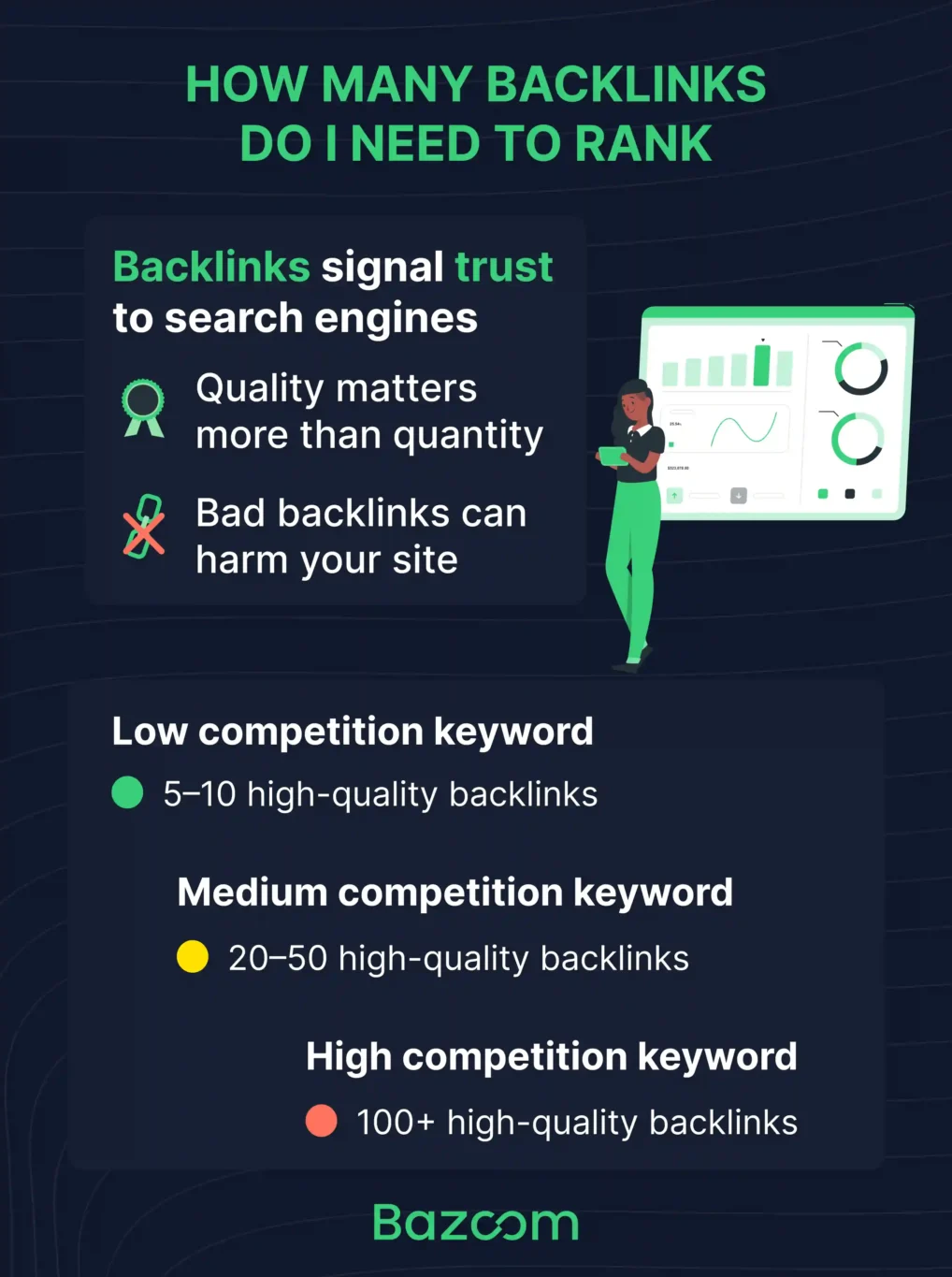
Not all backlinks carry the same weight. A single relevant link from a respected industry site can have a lot more influence than one hundred weak links from unrelated web pages. Quality matters because Google evaluates the authority of the linking domain, the relevance of its content, and the natural placement of the link.
A high-quality backlink comes from a relevant website with strong editorial practices. Ideally, these are dofollow links, which pass authority to your site and improve your backlink ranking. Nofollow links do not pass authority in the same way, but search engines treat them as hints. They can still support SEO by aiding discovery, signaling relevance, and driving qualified referral traffic.
The link should appear within meaningful, high-quality content and be surrounded by information that matches your topic. In comparison, weak links will often come from low-quality articles, poorly maintained sites, or irrelevant topics. These links may get indexed, but they rarely improve search engine rankings.
Let’s look at two different scenarios. In the first, you receive one backlink from a major news outlet. In the second, you receive a large number of backlinks from low-traffic blogs with no topical focus. The single high-quality backlink is likely more valuable. It sends a clear signal that your content is trustworthy.
So, how many backlinks are considered good? There is no universal number. The goal is to build a natural mix of strong and relevant backlinks. Over time, this builds page authority. You may still need volume, but your foundation should focus on quality first.
Bazoom’s network makes this easier. We specialize in matching brands with high authority sites and publishers. You gain access to more links that fit your niche and improve your ranking factor. This helps you understand how many high-quality backlinks may be needed to support your long-term strategy.
Evaluating keyword competition to estimate your backlink goals
Competition shapes your backlink needs more than anything else. If you target keywords that are easy, you may not need that many backlinks. For competitive keywords, you need even more high-quality links. The key is to know exactly where you stand.
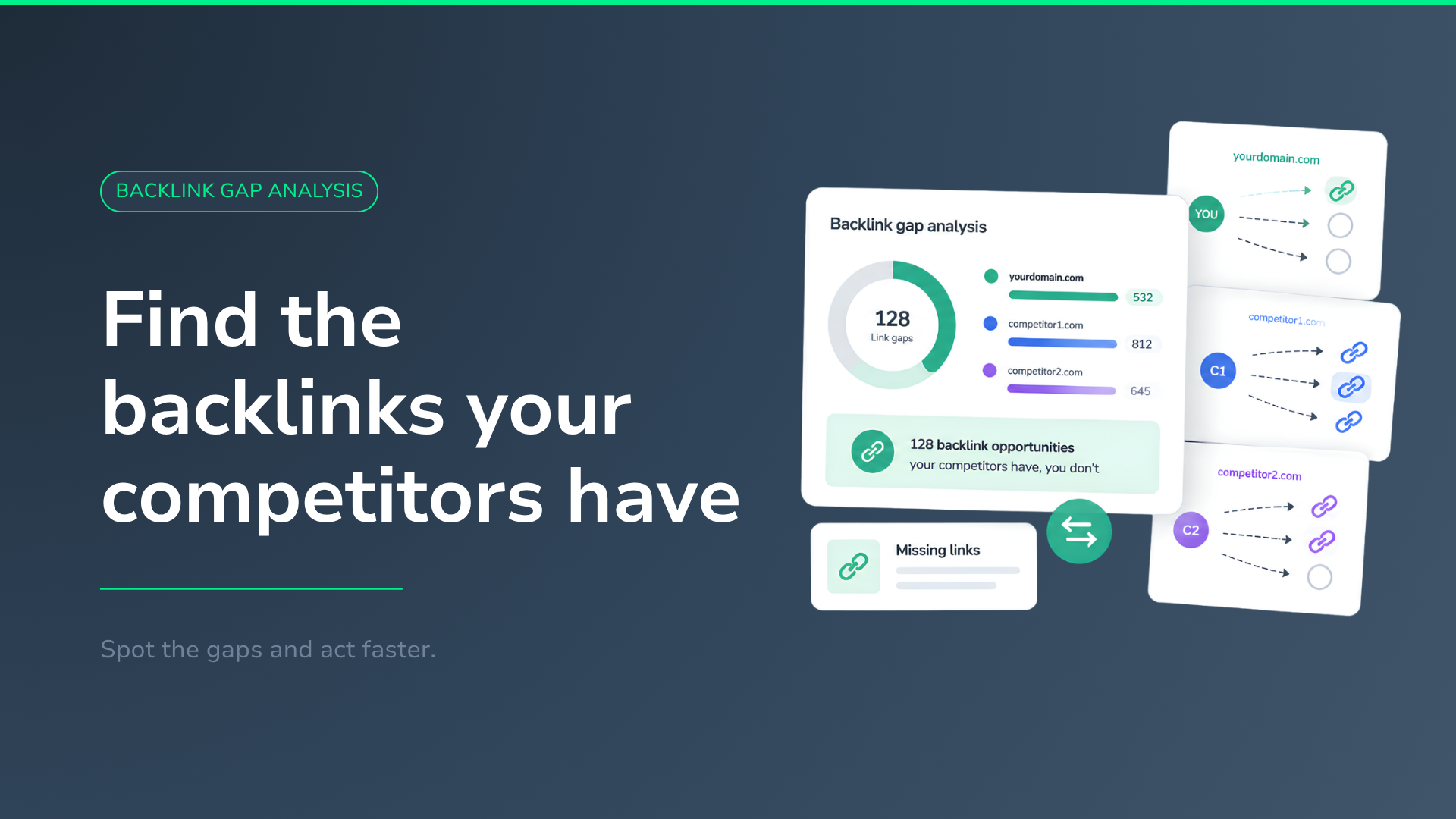
A good place to start is with a competitive analysis for backlink ranking for your target keyword. Look at their link profile. Count how many backlinks they have, what types they are, and where they come from. Check the authority of these linking web pages. If the top results from referring domains have a strong backlink profile, you should plan a similar strategy. If the results have weaker backlink profiles, you may have an easier path.
“To estimate how many backlinks you typically need to rank, match your goals to what successful competitors already show. Their link profiles set the benchmark.”
– Tamara Novitović, Head of SEO at Bazoom Group
Bazoom can help you with this analysis. You can review page authority, compare link metrics, and identify the gaps in your strategy. You also gain support for planning a link building strategy based on your actual competition. This can make it easier to set realistic goals for how many backlinks you need and invest in building links that matter the most.
Domain authority’s impact on your backlink needs
Domain authority (DA) is a domain-level metric developed by third-party SEO tools to estimate the overall strength and trustworthiness of an entire website compared to others. While DA is not a Google ranking factor, it is commonly used to benchmark authority and evaluate how competitive a site is within search results.
A new site will typically start with a low domain authority, especially if it has not yet earned many backlinks. In this case, you would need a steady flow of high-quality backlinks. These links build credibility. They show search engines that they can trust your domain. Over time, your DA grows, and you need fewer backlinks to rank for similar target keywords.
For illustration purposes, an established site with high domain authority may rank for a medium-competition keyword with only a small number of strong and relevant backlinks. In contrast, a newer site with low domain authority may need significantly more links to achieve the same visibility. The exact number can vary widely depending on the niche, search intent, content quality, and how competitive the search results are.
Understanding domain authority’s effect on your backlink strategy helps you make smarter decisions. If your DA is low, expect to invest more effort. If your DA is high, you can focus on fewer but stronger backlinks.
Bazoom provides metrics that help you track DA changes. As you gain more links, you can monitor improvements and adjust your strategy. Bazoom’s tools make it easier to understand how many backlinks are needed if the DA is low and how to improve your position over time.
Setting realistic backlink benchmarks for all competition levels
Many site owners ask how many backlinks you need to rank, but the reality is that backlink benchmarks vary widely depending on competition, authority, and search intent. Backlinks need to be niche-relevant. A low-competition keyword may only need five to ten backlinks. Whereas highly competitive keywords can require one hundred or more backlinks.
Backlinks are not just about quantity. Even if you have many links, having too many backlinks from low-quality or irrelevant sites can harm your profile. Focus on quality first, then scale naturally. Combining this with strong page optimization ensures that each link passes maximum value and relevance to your content.
“If your competitors have thirty backlinks, aiming for five will not be enough. If they have hundreds, you must plan for long-term investment. You don’t need to match their numbers exactly; you need to match their quality and build a link profile that feels natural.”
– Jonathan X. Valtersson, SEO Strategist at Bazoom Group
To determine how many backlinks you really need, look at keyword difficulty scores. Then compare your domain strength to your competitors. This will give you a reasonable benchmark.
Bazoom can also help you gauge how many backlinks are good for your target category. You gain access to publisher metrics, industry averages, and ranking data. With these insights, you can build a plan that aligns with your competition without overshooting your capacity.
Proven tactics for earning high-value backlinks
Earning high-value backlinks does not require luck. It requires strategy. There are several proven methods that can help you build multiple links that are good quality consistently.
Guest posting remains one of the most effective tactics. You write a valuable blog post for a relevant site, and they include a natural backlink. Expert partnerships also work well. When collaborating with industry specialists, you can contribute insights, quotes, or data to their content.
Guest posting and expert partnerships can earn both dofollow and nofollow links. These tactics can also generate valuable referral traffic from readers of the target web page. Contributions like this often earn natural editorial backlinks because your expertise strengthens their article. This approach also builds long-term relationships, which can lead to repeat mentions and steady link growth. This is part of a broader natural link acquisition strategy, where high-quality links are earned organically rather than purchased or forced.
Another strong tactic is publishing compelling blog posts. If your content answers important questions, it becomes link-worthy. People may reference it naturally. This is slower, but the links you earn this way carry strong trust signals.
You can also build links through industry relationships. Participate in online communities, share insights, and collaborate on projects. Over time, your network creates opportunities. These strategies help you increase backlink quantity without sacrificing quality. The most effective backlink tactics are also scalable, allowing you to repeat proven methods without sacrificing quality. When you combine several methods, your backlink profile grows steadily and safely.
Bazoom supports this process by simplifying outreach. You can reach relevant publishers, manage approvals, and track performance. This makes building backlinks for better rankings a structured and scalable process.
Targeting authority and relevance for maximum backlink impact
Authority and relevance shape backlink value more than anything else. Focusing on authoritative and relevant backlinks strengthens your backlink profile and supports effective on-page optimization for both users and search engines. Authority also refers to a site’s overall strength. High-authority sites have a history of quality content, strong editorial guidelines, and established trust. Links from these sites pass more value.
Relevance reflects how closely the linking site matches your topic. If you, for example, run a fitness brand, links from wellness blogs or sports publications offer strong relevance. Whereas a link from a tech directory may not help as much. Links from respected domains not only pass more authority, but they also signal to Google that your content is trustworthy and valued by experts. These links tend to have higher click-through potential and can drive more organic traffic to your site.
Bazoom excels at connecting you with these types of publishers. The platform helps you attract top authority sites that fit your industry. You can gain links that not only improve ranking but also improve visibility with the right audience.
Sign up with Bazoom to secure high-authority backlinks that drive traffic and strengthen your site’s credibility.
Avoid risky link building tactics and stay penalty-free
Not all link building tactics are safe. Some create short-term gains but place your site at risk. Google penalizes sites that use artificial methods like automated link farms, link exchanges, or low-quality purchased link schemes. These are often referred to as black hat tactics and may increase numbers, but harm the credibility of your site too.
Avoid tactics that create unusual patterns. Sudden spikes in low-quality links raise red flags. Links placed in irrelevant content can also hurt your ranking factor. When in doubt, choose safely. This helps answer how many backlinks are too many if they’re low-quality. Even a small number can harm your profile if it comes from toxic sources. Quality always matters more than volume.
Preventing link penalties requires you to be patient. Focus on gaining links that look natural, reflect relevance, and add value to users. Compare short-term gains with long-term outcomes: Quick, low-quality links may boost numbers temporarily but can harm your rankings, whereas steady, high-quality links build lasting authority.
Bazoom supports this approach with ethical outreach and verified website owners. You gain trust-building links without risking long-term damage.
Track and measure your backlink growth effectively
Tracking your backlinks helps you understand what works and what needs improvement. By monitoring link growth, quality, and relevance, you can refine your strategy and increase ranking potential.
Tools like Google Search Console show new links, lost links, and overall progress. Third-party tools like Ahrefs and Semrush provide deeper insights into authority and context. Bazoom’s dashboard offers clear metrics that help you evaluate link performance in real time.
Look at backlink quality, not just volume. Check whether new links come from authoritative sites. Review anchor text distribution to ensure natural patterns. Monitor trends to see whether your strategy moves in the right direction.
Regular monitoring helps you spot when you might have too many backlinks coming from low-value sites. Removing or disavowing these links protects your site’s authority and ensures you have a healthy backlink ranking.
Tracking helps you increase backlink performance by identifying gaps. It also shows whether your ranking improvements match your efforts. When you take a structured approach, your healthy backlink ranking grows steadily.
Identifying and handling harmful or toxic backlinks
Even with a strong link building strategy, you may receive harmful backlinks. Spam sites, irrelevant directories, or automated networks can link to your content without your permission. These toxic links weaken credibility. They may hurt your ranking if ignored.
To detect these issues, use backlink audit tools. Look for sites with no real content, questionable topics, or extremely low authority. These are common sources of toxic links. When you identify potentially harmful links, document the URLs and assess the risk carefully.
If removal isn’t possible and there is a clear pattern of manipulative or spammy links, you could consider using Google’s Disavow Tool to signal that those links should be ignored. This step should be used cautiously, as disavowing legitimate links can negatively impact performance. When appropriate, reaching out to website owners to request link removal is often the safer first option.
Understanding how many backlinks become a danger if from the wrong sources helps you avoid long-term issues. Acting early protects your trust signals. Over time, these harmful links can undermine the credibility of your site in Google’s eyes. This can make it harder to compete for keywords. Regular monitoring and proactive removal help protect your site’s long-term performance.
Do you need help with this? Bazoom’s support team helps you identify spammy or unwanted links. With guidance, you can maintain a clean profile and deal with spammy backlink scenarios.
Review and update your backlink profile regularly for ongoing success
SEO is not static. Your backlink profile changes as new links appear, old links disappear, and competitors adjust their strategies. Regular audits help you stay ahead. Check for outdated, toxic, or lost links, and update your strategy based on performance. If a particular type of link works well, invest more in that method. If a tactic isn’t delivering, adjust it accordingly.
A strong backlink strategy evolves with industry trends. Regular clean-ups are essential to prevent ranking decline and maintain authority and relevance. By actively reviewing and updating your backlinks, you ensure long-term performance and sustained SEO success.
If you’re still asking: “How many backlinks do I need to rank?”, the answer lies in maintaining an active and adaptable strategy rather than chasing a fixed number. Always aim for fresh, authoritative links that support your goals. Keep your profile relevant and natural. A good approach is to regularly audit your backlink profile, identify top-performing links, and prioritize similar opportunities while phasing out low-value or outdated links.
Bazoom makes this process simple. The platform helps you review your backlink profile, find new opportunities, and maintain consistent growth. With regular updates, it’s easy to sustain a top backlink ranking.
Do you want to take control of your backlink strategy? Sign up on our platform and let us help you monitor, grow, and maintain your links to maximize your SEO performance.